Cauvery hard water + clear glass shower doors: the architect's 12-month handover care brief
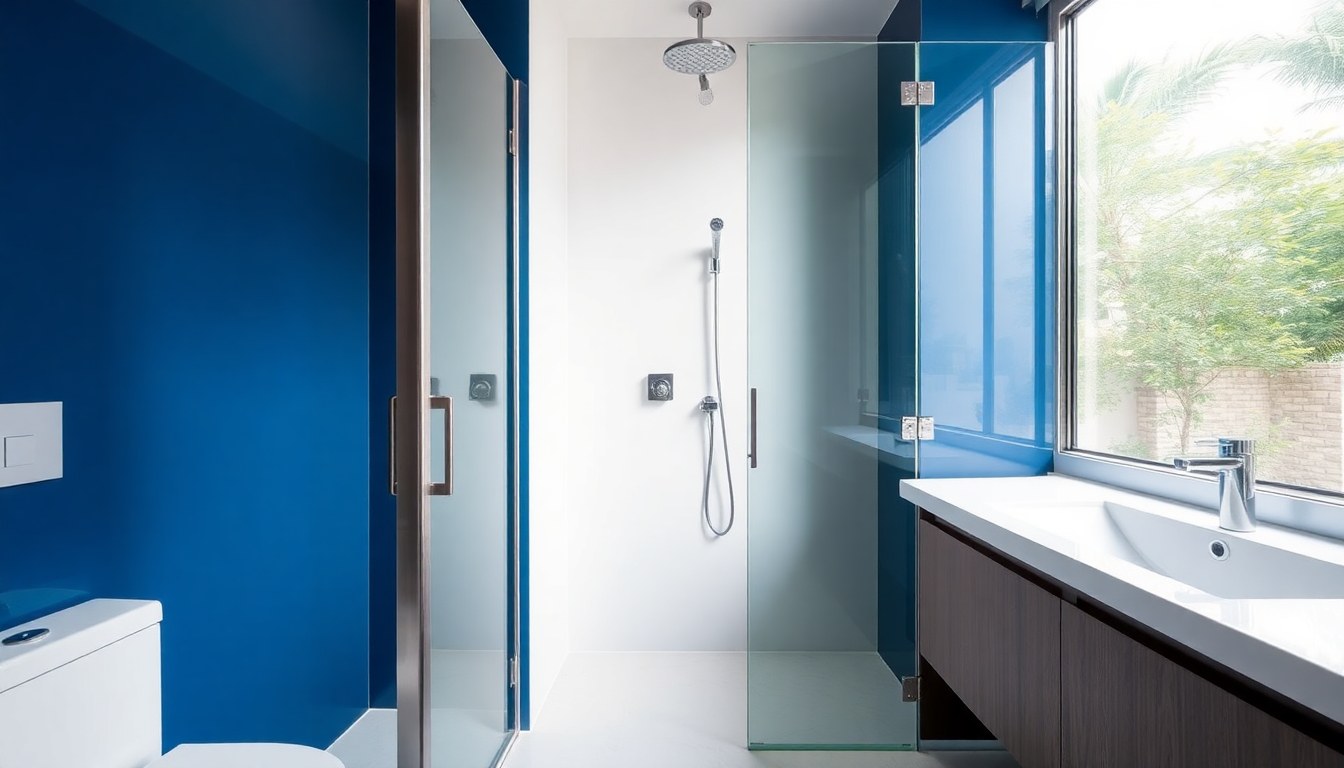
A Whitefield architect handed over a 1,850 sq ft apartment last monsoon with four bathrooms, each fitted with 10 mm clear-glass enclosures. Six months later the client called: every door showed white bloom along the bottom rail and hinge line. The issue wasn't the glass or the install — it was the absence of a care protocol in the handover binder. Bangalore's Cauvery supply averages 180–220 ppm total dissolved solids, and clear glass records every missed wipe. The fix isn't a different glass; it's a maintenance brief that treats the enclosure like any other specified surface.
Why Cauvery TDS matters for clear-glass enclosures
Cauvery water in Bangalore typically runs 180–220 ppm TDS, occasionally spiking to 280 ppm in summer months when reservoir levels drop. The dissolved calcium carbonate and magnesium salts are invisible in flow but crystallise on evaporation. A single shower deposits roughly 40–60 ml of water on the glass surface; if left to air-dry, that water leaves behind 7–13 mg of mineral residue. Over thirty days that compounds to a visible haze, and over six months it can begin to etch the silica surface if the deposit is acidic or if it traps soap scum underneath.
This isn't a glass-quality issue — it's a water-chemistry issue. The same TDS that scales a tap aerator or leaves rings in a steel sink will mark clear glass. The difference is that glass is specified for transparency, so every deposit is visible. Frosted or patterned glass diffuses the light enough to hide early-stage bloom; clear glass does not. That's why the maintenance protocol for a clear enclosure in HSR Layout needs to be tighter than the protocol for a frosted partition in the same building.
The 12-month maintenance protocol we recommend in handover documentation
We recommend architects include a one-page care sheet in the bathroom section of the handover binder, filed alongside the fixture cut-sheets and the as-built drawings. The sheet should specify three actions: daily wipe, weekly descale, and quarterly inspection. Each action has a defined frequency, a recommended product type, and a failure mode the homeowner can recognise.
Daily wipe: the non-negotiable step
After every shower, wipe the interior glass surface with a dry microfibre cloth or a rubber-blade squeegee. This removes 95 per cent of the water before it can evaporate and deposit minerals. The wipe takes fifteen seconds and eliminates the primary failure mode. If the household has help, this step should be part of the daily bathroom checklist. If the homeowner is self-maintaining, a wall-mounted squeegee holder next to the enclosure makes the action automatic. Specify the holder at the shop-drawing stage — it's a detail that shapes behaviour.
Weekly descale: addressing the residual five per cent
Even with daily wiping, some water will dry on the glass — along hinge pins, in the bottom channel, at the seal overlap. Once a week, spray the glass with a mild acidic descaler (citric-acid-based or dilute acetic acid, pH 3–4) and wipe clean with a damp cloth. This dissolves any calcium carbonate that has begun to bond. The descaler should be non-abrasive and free of silica grit; many commercial "bathroom cleaners" contain fine abrasives that will scratch toughened glass over repeated use. We recommend specifying a product by ingredient, not by brand: look for citric acid or lactic acid as the active component, and confirm the absence of silica, pumice or alumina.
Quarterly inspection: catching etch before it spreads
Every three months, inspect the glass under direct light for any permanent haze or rough texture. Early-stage etching feels slightly gritty to the fingertip and cannot be removed with descaler. If detected, it indicates that the weekly descale interval is too long for that household's water exposure, or that soap scum is being left to dry between cleanings. The fix is to tighten the descale frequency to twice weekly and to add a surfactant rinse (a few drops of dish soap in a spray bottle of water) after each shower to prevent soap from bonding to the mineral layer. Etch that has progressed beyond the fingertip-gritty stage is permanent and can only be addressed by replacing the panel.
When to expect first visible deposit: a timeline by usage pattern
The timeline from install to first visible haze depends on shower frequency, household size, and whether the enclosure has a ceiling or is open-top. A master bathroom in a Koramangala duplex with two users and daily wiping may show no deposit for eighteen months. A shared bathroom in a Sarjapur Road villa with four users and inconsistent wiping may show bloom within eight weeks. The glass itself is identical; the difference is water exposure and maintenance discipline.
An open-top enclosure (no glass ceiling panel) allows steam to escape, which reduces condensation on the glass and slightly extends the time to first deposit. A fully enclosed enclosure traps humidity, which increases condensation and accelerates mineral buildup on the ceiling panel and the upper third of the door. If specifying a ceiling panel, flag this in the handover brief: the ceiling will require the same weekly descale as the walls, even though it's above eye level and easy to forget.
Descaler spec: what to include in the brief
Most homeowners will ask what product to buy. Rather than naming a brand — which may be discontinued or reformulated — specify the active ingredient and the pH range. A citric-acid-based descaler at pH 3–4 is effective and safe for daily use on toughened glass, stainless steel hardware, and PVD-coated finishes. Acetic acid (white vinegar diluted 1:1 with water) is a fallback if a commercial product isn't available, though it has a strong odour that some households object to.
Avoid any product labelled "heavy-duty lime remover" or "professional-grade descaler" unless you have confirmed the pH is above 2. Products with pH below 2 can damage PVD coatings on hinges and handles, and can etch the glass surface if left in contact for more than a few minutes. The handover brief should explicitly state: do not use hydrochloric acid, sulfamic acid, or any product marketed for industrial or commercial tile cleaning. These are appropriate for construction-stage cleanup, not for ongoing maintenance.
What happens if the protocol isn't followed: the six-month and twelve-month failure modes
If the daily wipe is skipped consistently, visible haze will appear within six to ten weeks, concentrated along the bottom rail and any horizontal seals. This haze can still be removed with a descaler and some mechanical effort (a non-scratch scouring pad), but it requires more than the weekly wipe. If the haze is ignored for another three months, it begins to etch the glass. Etching is a chemical attack on the silica surface; the calcium carbonate bonds to the glass and creates microscopic pits. Once etched, the surface cannot be restored to optical clarity without polishing, which is not economical on a installed enclosure.
At the twelve-month mark, an unmaintained enclosure in a high-use bathroom will show permanent haze across 30–40 per cent of the lower glass area, and the homeowner will begin to research "how to remove hard water stains" — which is the wrong question. The stains aren't removable at that stage. The correct question is: why wasn't the protocol followed? Often the answer is that no protocol was provided. The architect assumed the homeowner would "figure it out," or the interior designer mentioned it verbally during the final walk-through and it wasn't retained. A written brief, filed with the other handover documents, solves this.
Including the care sheet in the RCP and bathroom schedule
Some architects append the care sheet to the bathroom RCP; others include it as a note in the finish schedule. Either location works, as long as it's in writing and handed over with the other close-out documents. The sheet should be a single page, with three sections: daily actions, weekly actions, and quarterly inspection. Each section should list the action, the tool or product required, and the failure mode if skipped. This format is familiar to homeowners who have received appliance manuals or stone-care guides, and it sets the expectation that the enclosure is a maintained surface, not a fit-and-forget fixture.
If the project includes a facilities management handover (common in larger Indiranagar or Sadashivanagar homes with full-time help), include the care sheet in the housekeeping manual as well. The person responsible for daily bathroom cleaning is the person who will execute the protocol, and they need the instructions in the same binder as the floor-care and fixture-cleaning procedures.
Questions architects ask
Does frosted or back-painted glass reduce the maintenance requirement?
Frosted glass diffuses light, so early-stage mineral deposits are less visible — but the deposits still form, and the etching risk is identical. Back-painted glass hides some haze because the paint layer is opaque, but the exterior surface still requires the same wipe-and-descale protocol. Neither finish eliminates the maintenance; they just delay the point at which the homeowner notices the problem. If the goal is low-visibility deposits, frosted glass buys an extra two to three months before haze becomes obvious. If the goal is actual low maintenance, the only solution is disciplined wiping, regardless of finish.
Can a water softener or inline filter eliminate the need for daily wiping?
A whole-home water softener reduces TDS by replacing calcium and magnesium with sodium, which does reduce mineral deposits on glass. However, sodium leaves its own residue (a fine white film), and the softener does not remove soap scum or body oils, which still require wiping. An inline shower filter can reduce chlorine and some dissolved solids, but most residential filters are not rated to handle the flow rate of a rain shower or a body jet array, and they need replacement every three to six months. Neither solution eliminates the wipe; at best, they reduce the descale frequency from weekly to fortnightly. For a homeowner willing to invest in a softener, the maintenance benefit is real but incremental — not transformative.
What's the expected service life of a clear-glass enclosure under the recommended protocol?
A 10 mm toughened-glass enclosure, maintained per the daily-wipe and weekly-descale protocol, will retain optical clarity for ten-plus years. The hardware — hinges, handles, channels — may require replacement or adjustment at the seven- to eight-year mark due to mechanical wear, but the glass itself is stable. The warranty we provide is ten years on the glass and five years on hardware, which reflects the expected service life under normal residential use. If the protocol is not followed and the glass etches within two years, that is not a warranty claim — it's a maintenance failure, and the handover documentation should make that distinction clear.
Should the care protocol differ for a guest bathroom versus a master bathroom?
Yes. A guest bathroom in a Jayanagar home that sees use twice a month can extend the descale interval to fortnightly or even monthly, and the daily wipe can be replaced with a post-use wipe (i.e., wipe only when the shower is used). A master bathroom with daily use requires the full protocol. The handover brief should specify different schedules for different bathrooms if usage patterns are known. If usage is uncertain, default to the stricter protocol — it's easier to relax a schedule than to recover from six months of neglect.
What do we tell a client who objects to the maintenance requirement?
Frame it as equivalent to any other specified surface. A honed Kota stone floor requires weekly sealing; a teak vanity requires annual oiling; a clear-glass enclosure requires daily wiping. The client chose clear glass for its transparency and the sense of spatial continuity it provides — that optical property comes with a care requirement. If the client is unwilling to commit to the protocol, specify frosted glass or a framed enclosure with smaller glass area. The worst outcome is to install clear glass, skip the handover brief, and field a complaint six months later. Set the expectation at the specification stage, document it in writing, and the client will either adopt the protocol or choose a different finish.
Spec a Bathqube enclosure with the handover care brief included in your project documentation, or request a configurator quote with maintenance protocols tailored to your Bangalore project's water supply and usage pattern.
