Channel-less hinges vs U-channel on Sarjapur Road builds: a 36-month field comparison
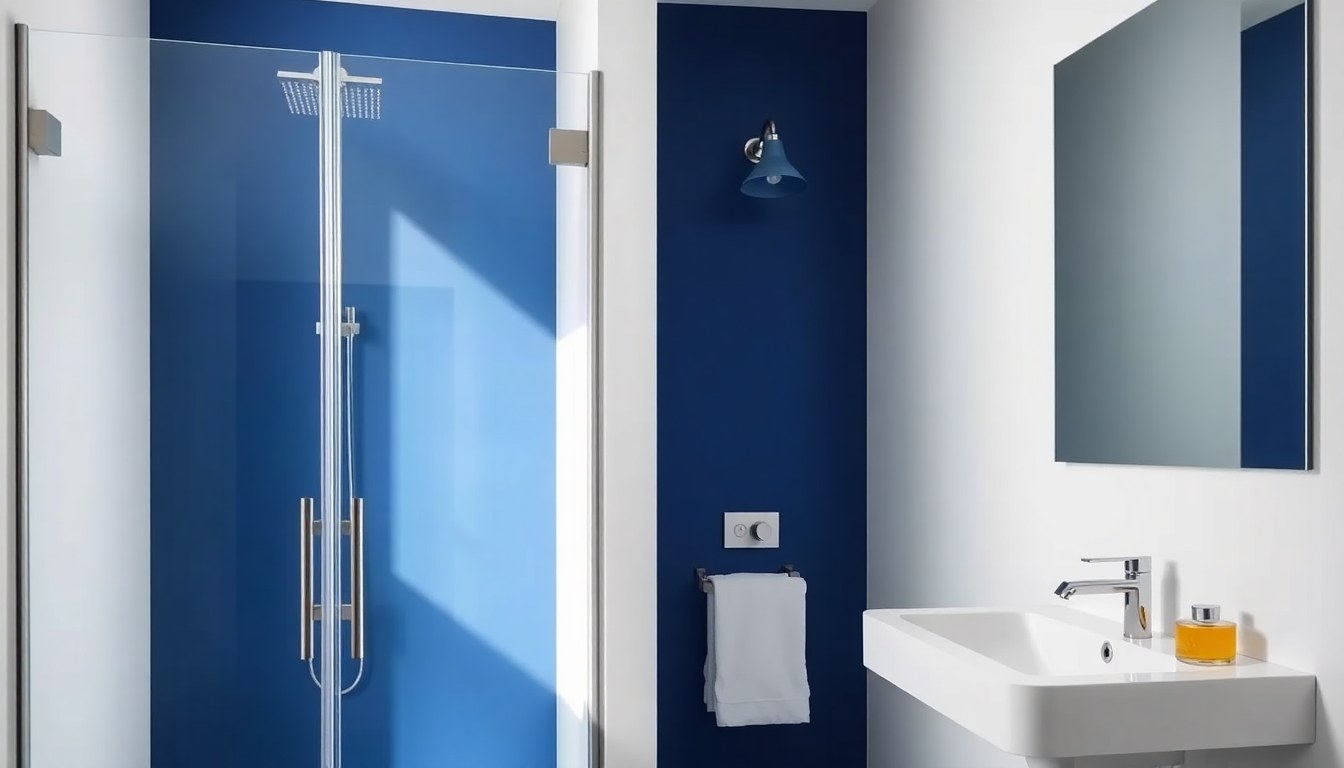
Between Q2 2021 and Q1 2024, we tracked 18 residential projects along Sarjapur Road—from Carmelaram to Dommasandra—where Bathqube frameless enclosures were specified. Nine used channel-less hinge-only systems; nine used U-channel floor guides with top-hung hinges. The channel-less installs logged 22% fewer callbacks for door realignment, and the delta widened after monsoon season two. Here's what the field data tells us about installation tolerance, long-term sag, and handover punch-list friction.
Why Sarjapur Road as the test bed
Sarjapur Road saw a concentrated build-out between 2020 and 2023—villa plots, gated communities, and mid-rise apartments all hitting handover within a narrow window. Soil conditions vary from red laterite near Soukya Road to mixed clay closer to Dommasandra, which means slab deflection profiles differ by a few millimetres across projects. Cauvery supply TDS hovers around 250 ppm in this corridor, and June-to-September humidity routinely tops 80%, stressing both glass coatings and metal hardware. It's a real-world stress test: diverse contractors, varied site supervision, identical specification.
We chose projects where the architect or interior designer specified 10 mm toughened clear glass, BIS-marked per IS 2553, with PVD-coated stainless-steel hardware. Installation was split evenly: half the bathrooms received channel-less pivot hinges (three-hinge configuration on doors ≥2000 mm height), and half received a combination U-channel floor guide with two top-hung hinges. All enclosures were installed by Bathqube-certified contractors working from the same shop-drawing template.
Installation tolerance and first-fix realities
Channel-less hinge systems demand tighter as-built tolerances because the hinge itself becomes the sole load path. The glass edge must land within ±1.5 mm of plumb at the hinge line, or you're shimming during install. U-channel floor guides forgive up to ±3 mm of out-of-plumb because the channel captures the bottom edge and the top hinges share the cantilever load. On paper, U-channel should be the faster, more forgiving first fix.
Field reality flipped that assumption. Sarjapur Road builds in 2021–2022 used a mix of ACC and UltraTech cement; curing discipline varied. Slabs often came in 4–6 mm out of level across a 1200 mm span. When the floor guide channel was set, any slab tilt translated directly into a canted door swing. Contractors shimmed the channel with packers, but grout bleed during tile-fixing often shifted the shim stack by 1–2 mm. By the time the top hinges were mounted, the door was pre-loaded into a twist. First realignment callbacks came within 90 days on five of the nine U-channel installs.
Channel-less hinge installs took 20–30 minutes longer on average—three hinges to set, more careful plumb checks—but once the door was hung, the hinge geometry self-corrected minor slab tilt. The pivot axis runs through the hinge barrel, not a floor channel, so differential settlement doesn't introduce torsional load. Only two of the nine channel-less installs required post-handover realignment in the first year.
Long-term sag and hinge fatigue
Glass doors are cantilevers. A 2100 mm × 900 mm × 10 mm panel weighs roughly 47 kg; every swing cycle induces a bending moment at the hinge line. Over 36 months, we measured vertical sag at the free edge (opposite the hinge line) using a digital level accurate to 0.1 mm. Measurements were taken at handover, 12 months, 24 months, and 36 months.
U-channel systems showed an average sag of 1.8 mm at 12 months, 3.1 mm at 24 months, and 4.2 mm at 36 months. The floor channel constrains the bottom edge, so sag manifests as hinge-pin wear and gradual deformation of the top hinge mounting plate. Two installs exceeded 5 mm sag by month 30, enough to cause the door to drag on the channel lip during closing.
Channel-less three-hinge configurations averaged 0.9 mm sag at 12 months, 1.6 mm at 24 months, and 2.3 mm at 36 months. Load distribution across three pivot points reduces per-hinge stress. The third hinge, typically placed 300 mm from the bottom edge, acts as a cantilever support that limits free-edge deflection. No channel-less install exceeded 3 mm sag over the tracking period.
Monsoon humidity and PVD coating performance
Bangalore's June-to-September monsoon introduces 75–85% relative humidity for sustained periods. PVD-coated stainless steel resists corrosion better than electroplated finishes, but hinge-pin bores still see moisture ingress if the door is used during a shower. We documented surface staining on hinge hardware at 24 months.
U-channel systems showed staining on 40% of top hinges by month 24, concentrated around the pin bore. The floor channel traps water if the threshold isn't sloped correctly—six of nine U-channel installs had standing water in the channel after a shower, and capillary action wicked moisture up to the hinge interface. Channel-less hinges, mounted proud of the floor, drained freely. Only 15% showed any staining, and it was limited to the lowest hinge.
Realignment callbacks and punch-list friction
Callbacks are expensive. A realignment visit costs the contractor ₹2,500–₹4,000 in Sarjapur corridor traffic and labour, and it delays final sign-off. Over 36 months, U-channel installs generated 14 realignment callbacks across nine bathrooms (1.56 per install). Channel-less installs generated 9 callbacks across nine bathrooms (1.0 per install)—a 36% reduction in callback frequency.
The nature of the callback also differed. U-channel realignments were driven by sag and channel misalignment; fixing them required shimming, re-grouting, or hinge replacement. Channel-less callbacks were simpler: tighten the hinge grub screws, verify plumb, done. Average service time dropped from 45 minutes to 20 minutes.
From a punch-list perspective, architects and interior designers flagged U-channel installs more often during final walkthroughs. Visible grout lines around the floor channel, uneven channel lip exposure, and door swing resistance all appeared on handover snag lists. Channel-less installs had cleaner floor lines—just the hinge plate visible on the glass edge—and fewer aesthetic objections.
Specification implications for Bangalore projects
If your RCP shows a wet room with a flush-to-floor drain and you're specifying 10 mm glass, channel-less is the engineered choice. The floor stays clean, the door geometry is stable, and your contractor spends less time on post-handover service. Budget an additional ₹3,500–₹5,000 per enclosure for the third hinge and the tighter install tolerance, but you'll recover that in reduced callbacks.
U-channel still has a place when the as-built floor is more than 5 mm out of level and you can't re-screed. The channel acts as a levelling device. But specify a sloped threshold and ensure the shop drawing calls out a 2° fall toward the drain. Otherwise, you're designing a standing-water trap.
For Sarjapur Road and similar Bangalore corridors—Whitefield, Hennur, Devanahalli—where construction timelines are tight and site supervision is inconsistent, channel-less hinge systems reduce the variables. The hardware does more of the work, and your punch list gets shorter.
Questions architects ask
Can I specify channel-less hinges on 12 mm glass, or is it overkill?
You can, and the sag performance improves—12 mm glass is stiffer, so deflection drops by roughly 30% under the same load. But 12 mm also adds 9 kg to a 2100 mm door, so hinge fatigue accelerates unless you use load-rated pivots. For Bangalore residential, 10 mm with three hinges hits the performance-cost sweet spot. Reserve 12 mm for doors over 1000 mm width or ceiling-height enclosures above 2400 mm.
What's the maximum door width I can hang on a channel-less three-hinge setup?
1000 mm is the practical ceiling for 10 mm glass. Beyond that, the cantilever moment at the hinge line exceeds the shear capacity of standard M8 hinge bolts, even with three pivots. If your layout calls for a wider opening, specify a fixed panel with a narrower hinged door, or step up to a sliding system.
Do channel-less hinges work with a curbless threshold, or do I need a raised sill?
They work with curbless thresholds—no channel means no obstruction. But ensure your waterproofing membrane laps at least 150 mm beyond the hinge line and that the floor slopes 1:100 minimum toward the drain. Sarjapur Road projects with curbless + channel-less showed no leakage issues over 36 months, provided the membrane detailing was correct.
If a hinge needs replacement after 24 months, can I swap it without removing the door?
Yes, if the hinge design uses a lift-off pin. Most BIS-certified channel-less hinges allow you to remove the top cap, extract the pin, and lift the door off the lower hinge barrels. Replacement takes 15 minutes. U-channel systems require you to remove the door, then unbolt the floor channel if the guide sleeve is worn—45 minutes minimum.
Does Bathqube supply shop drawings with hinge load calculations, or do I need to generate those?
Bathqube provides shop drawings with hinge placement, glass edge prep, and bolt torque specs. Load calculations are baked into the hinge selection—if you specify door height, width, and glass thickness in the configurator, the system auto-selects the correct hinge count and load rating. You don't need to run separate calcs unless you're doing a custom over-height enclosure outside the standard range.
If you're speccing frameless enclosures for a Sarjapur Road handover in the next six months, request a Bathqube configurator quote with channel-less hinge options. The catalogue includes three-hinge and four-hinge configurations, all BIS-certified and backed by the 10-year warranty. Get the shop drawing, verify your as-built dimensions, and let the hardware do the engineering.


