Faucet spout reach vs basin depth: the 180mm rule for Jayanagar pedestal sinks
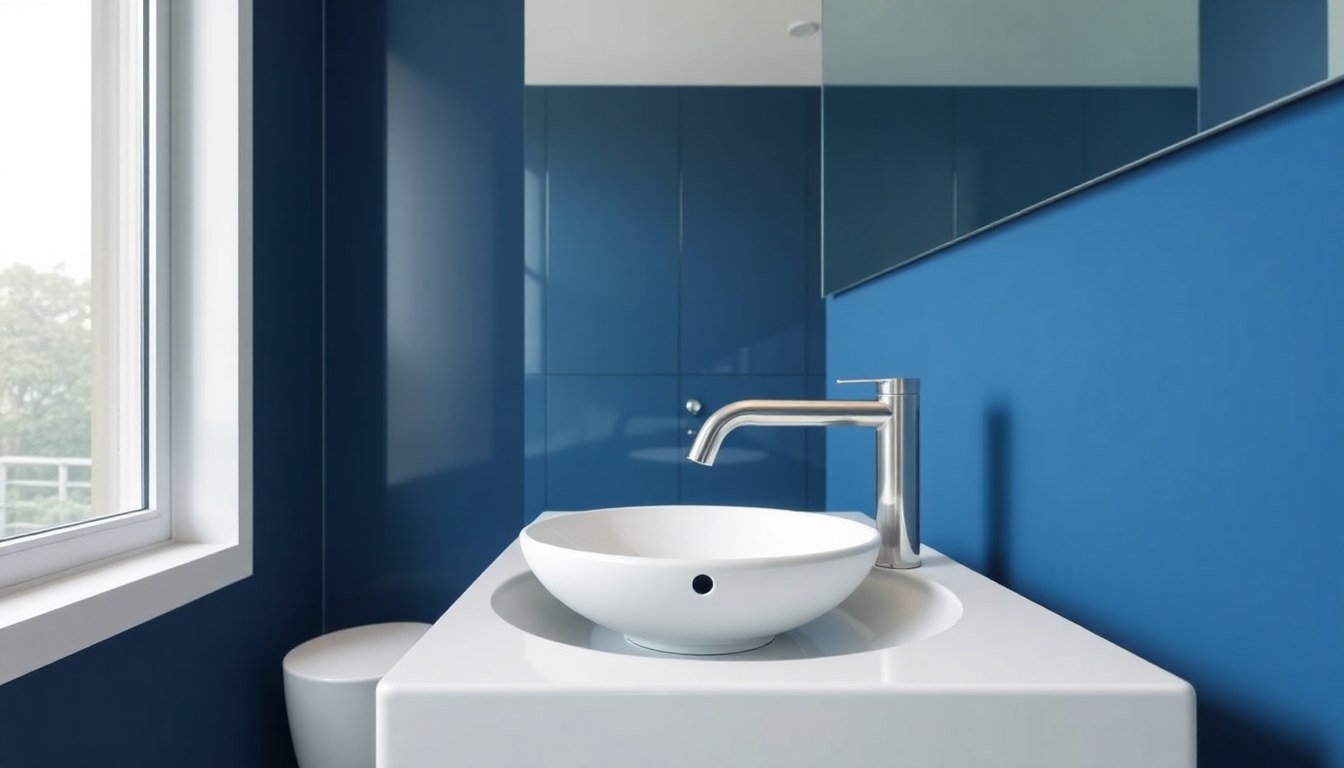
A wall-mount faucet roughed in at 240mm above finished floor, paired with a 140mm-deep pedestal basin, puts the stream 100mm above the basin floor—high enough that Cauvery hard water at 2.5 bar rebounds off vitreous china and wets the counter. The architect discovers this at handover, the plumber has already closed the chase, and the fix requires re-routing supply lines inside a tiled wall. The error isn't the faucet or the basin—it's specifying them independently, without coordinating spout projection, arc height, and basin geometry before rough-in.
Why wall-mount faucets fail without basin-depth coordination
Wall-mount faucets are specified for clean counters, concealed plumbing, and the narrow depth of pedestal or vessel basins common in Jayanagar and Basavanagudi renovations where floor space is tight. But a wall-mount spout has no deck to reference: its position relative to the basin floor depends entirely on rough-in height, spout length, and the basin's own depth. Specify any one of those dimensions in isolation and the stream either overshoots the drain, lands too close to the back wall, or falls from a height that generates splash.
The 180mm rule is a working heuristic: for a pedestal basin 400–450mm wide and 140–160mm deep, the spout tip should sit roughly 180mm horizontally from the back wall and deliver water 80–100mm above the basin floor. That geometry ensures the stream lands over the drain, clears the basin rim during hand-washing, and doesn't rebound off the slope. The rule isn't code—it's coordination, and it must happen before the plumber sets the valve body.
The three variables that determine stream landing point
Spout projection is the horizontal distance from the wall face to the spout tip, typically 150–220mm for residential wall-mount faucets. Arc height is the vertical distance from the spout outlet to the basin floor, a function of rough-in height minus basin rim height plus spout drop. Basin depth is the vertical distance from rim to drain, usually 120–180mm for pedestal sinks. All three must be known—and documented in the shop drawing—before rough-in.
A common Whitefield specification error: the architect selects a 180mm-projection spout and a 120mm-deep vessel basin, assuming the short basin will sit higher and the short spout will reach. But the vessel rim is only 50mm above counter, the spout roughed in at 200mm above counter puts the outlet 150mm above the basin floor, and the 180mm projection lands the stream against the back slope, not over the drain. The contractor suggests shimming the basin or extending the spout with a reducer—both punch-list fixes that wouldn't be necessary if the three dimensions had been drawn together.
Coordinating rough-in height with basin rim and spout geometry
Rough-in height for a wall-mount faucet is the centerline of the valve body, measured from finished floor. IS 2064 (sanitary pipework) doesn't prescribe a standard height for basin faucets—only that supply outlets be accessible and above flood-level rim. In practice, residential rough-ins for wall-mount basin faucets range from 900mm to 1100mm above finished floor, depending on whether the basin is countertop, under-mount, vessel, or pedestal.
For a pedestal basin with rim at 800–850mm above finished floor and depth of 150mm, a rough-in at 1000mm puts the spout body about 150–200mm above the rim, depending on the faucet's own vertical offset. If the spout arcs downward 40mm and projects 180mm, the stream exits roughly 110mm above rim and 110mm above basin floor—within the 80–120mm target zone. But if the same rough-in is paired with a 120mm-deep basin, the stream now lands 130mm above the basin floor, high enough to cause splash during high-flow hand-washing.
Why you cannot rely on "standard" rough-in drawings
Many plumbers in Indiranagar and Koramangala work from a rough-in template that sets all basin faucet valves at 1050mm above finished floor, regardless of basin type. That height works acceptably for deck-mount faucets on 850mm-high counters, but it's too high for shallow vessel basins and too low for tall apron-front pedestal sinks. The template isn't wrong—it's generic, and wall-mount faucets require specific coordination.
The architect's responsibility is to provide a dimensioned section showing finished floor, basin rim height, basin depth, spout centerline, and spout projection. That drawing goes into the plumbing shop drawing set and becomes the reference for valve-body placement. Without it, the plumber roughs in to habit, and the faucet-basin relationship is left to chance.
Spout projection and the risk of back-wall wetting
Spout projection determines where the stream lands along the basin's front-to-back axis. Too short and the stream hits the back slope or the wall-mounted soap dish; too long and it overshoots the basin entirely or lands on the front rim where users rest their hands. For a 400mm-wide pedestal basin, a projection of 160–200mm usually centers the stream over the drain, assuming the basin is set 20–30mm proud of the wall to clear the trap.
In Jayanagar bathroom renovations where original pedestal sinks are retained and only the faucet is upgraded to wall-mount, the back edge of the basin often sits tight against the tile, leaving only 380mm of usable width. A 200mm-projection spout now lands the stream only 180mm from the front rim—acceptable for hand-washing but awkward for filling a vessel or rinsing a razor. The fix is either to pull the basin forward (requires re-setting the pedestal and trap) or to specify a shorter 160mm spout and accept that the stream will land closer to the back slope.
Hard-water splash and PVD durability
Bangalore Cauvery water averages 200–300 ppm TDS, with calcium hardness around 80–120 ppm. When a stream falls more than 120mm and strikes vitreous china at an angle, fine droplets rebound and settle on the faucet body, the wall tile, and the counter. Over weeks those droplets evaporate and leave calcium carbonate deposits that etch PVD finishes if not wiped daily. The taller the fall, the wider the splash radius.
Specifying an arc height of 80–100mm above the basin floor minimizes rebound without sacrificing clearance for hands. That's why the 180mm rule matters: it's not only about where the stream lands, but how far it falls and whether the installation will stay clean between housekeeping visits.
Basin depth and the 80–100mm clearance target
Basin depth varies widely: a shallow 12mm-thick glass vessel might be only 100mm deep, while a classic vitreous-china pedestal sink is 160mm deep, and a stone farmhouse basin can reach 200mm. The deeper the basin, the lower the stream can enter without causing splash, but the higher the rough-in must be to maintain hand clearance above the rim.
For basins 140–160mm deep—the majority of pedestal and under-mount sinks in Sadashivanagar and Malleshwaram residential projects—an 80–100mm fall from spout to basin floor is the target. That puts the spout outlet 220–260mm above the basin floor, or roughly 70–110mm above a rim that sits 150mm above the floor of the basin. The user's hands clear the spout during washing, the stream has enough energy to reach the drain, and splash is contained within the basin slope.
For shallow vessel basins 100–120mm deep, the same 80–100mm fall is maintained, but because the basin floor is higher relative to the counter, the rough-in height drops. A vessel basin with rim at 900mm above finished floor and depth of 100mm has its floor at 800mm above finished floor. To achieve a spout outlet 880–900mm above finished floor (80–100mm above basin floor), the rough-in is set at 950–1000mm, assuming a spout body with minimal vertical offset. This is 50–100mm lower than the rough-in for a pedestal sink in the same bathroom—another reason basin and faucet must be specified together.
Shop drawing checklist before rough-in
The plumbing shop drawing for a wall-mount faucet installation should include the following dimensions, all referenced to finished floor and finished wall face: rough-in height to valve centerline; basin rim height; basin depth (rim to drain); spout projection from wall face to tip; spout outlet height above finished floor; calculated stream landing point, front-to-back and top-to-bottom. If any of those six dimensions is missing, the coordination is incomplete.
For projects in HSR Layout and Sarjapur Road where bathrooms are prefabricated or where the basin is specified by the client's interior designer and the faucet by the architect, a coordination drawing is the only way to ensure the two elements work together. Bathqube provides dimensional PDFs for all engineered-glass basins, including rim height, depth, and drain offset, so the architect can overlay the faucet's spout geometry and confirm clearance before the valve body is set.
Tolerance and the risk of misalignment
Even with a complete shop drawing, field tolerance can shift the relationship. A valve body set 15mm higher than drawn because the plumber referenced the top of floor tile instead of the grout line; a basin pedestal shimmed 10mm to level it on an out-of-flat floor; a spout with 5mm more vertical drop than the catalog rendering showed—each error is small, but they compound. The result is a stream that lands 20mm forward or 25mm higher than the drawing predicted.
The mitigation is to rough in the valve, set the basin temporarily, and check the geometry with a level and tape before closing the wall. That site check adds fifteen minutes to the schedule but catches misalignment when it can still be corrected with a coupling extension or a pedestal shim, not a wall demo.
Questions architects ask
Can I use the same rough-in height for all wall-mount faucets in a project?
Only if all basins have the same rim height and depth. A powder room with a shallow vessel basin and a master bath with a deep under-mount basin require different rough-in heights to maintain the 80–100mm spout-to-floor clearance. Specify rough-in height per fixture type, not per floor.
What happens if the spout projection is too short?
The stream lands near the back of the basin, often against the slope or the wall-mounted soap niche. Users lean forward to reach the water, wetting the counter and the front of their clothing. The fix is to replace the spout with a longer projection or to pull the basin forward, which may require re-routing the trap.
Is there a BIS standard for wall-mount faucet rough-in?
IS 2064 covers sanitary pipework layout but does not prescribe rough-in heights for basin faucets, only that supply outlets be above flood-level rim and accessible for maintenance. Rough-in height is a coordination dimension, not a code requirement.
How do I specify spout projection if the basin isn't selected yet?
Establish a basin depth range (e.g., 140–160mm for pedestal sinks) and specify a spout projection that works across that range, typically 170–190mm. Alternatively, make faucet selection contingent on basin approval and issue the rough-in drawing only after both are confirmed.
What's the consequence of roughing in the valve before the basin is confirmed?
The valve position is fixed, and the basin must be selected to suit it—or the stream geometry will be wrong. If the basin is deeper or shallower than assumed, the stream will land too low or too high, and the only fix is to replace the spout, shim the basin, or open the wall and re-pipe the valve. All are punch-list delays that coordination would have prevented.
Bathqube faucets are engineered with documented spout projection, arc height, and valve-body offset so you can coordinate rough-in with basin geometry before the plumber sets the first coupling. Spec a Bathqube faucet with a dimensional PDF, or request a configurator quote with your basin shop drawing attached—we'll confirm the geometry before rough-in begins.


