Glass thickness selection for a 1800mm tall frameless shower enclosure: wind load + humidity in Hebbal
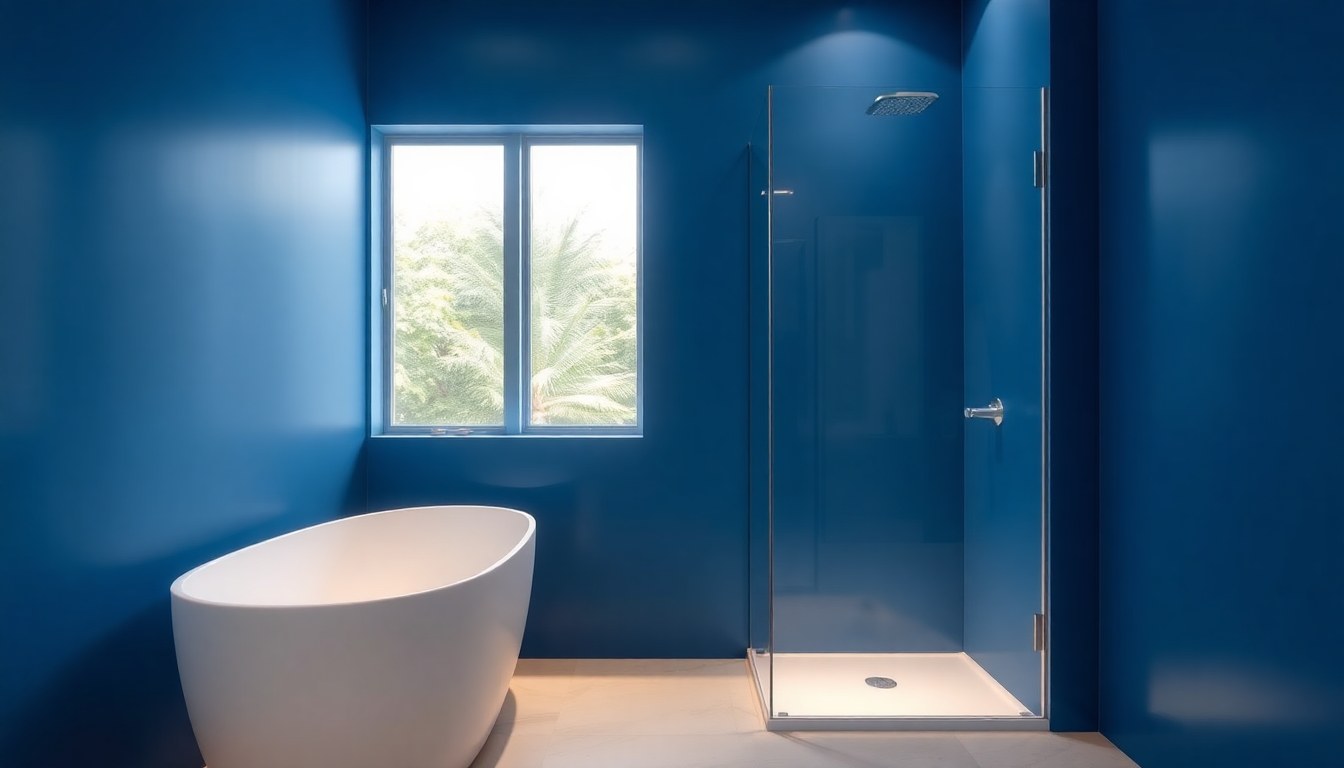
An 1800mm tall frameless shower enclosure in a Hebbal apartment—or any Bangalore project—sits at the threshold where 8mm engineered glass becomes insufficient. The combination of monsoon humidity (June through September), Cauvery hard water with TDS around 250 ppm, and the structural demands of a taller-than-standard panel requires a shift to 10mm glass. This note walks you through the engineering reasoning and the BIS compliance pathway that underpins that specification.
Why 1800mm triggers a thickness upgrade
Standard frameless shower enclosures in Bangalore projects typically run 1600mm to 1650mm in height. At that dimension, 8mm tempered glass (IS 2553 compliant, 12–15 MPa surface compression) performs well under normal bathroom wind loads and thermal cycling. The 1800mm height, however, introduces two new load vectors: increased cantilever stress on the bottom rail and longer moment arm for any lateral wind pressure during monsoon or open-window conditions.
A 200mm increase in height does not scale linearly. The bending moment on an unsupported glass panel grows with the square of the unsupported span. An 1800mm panel experiences roughly 1.27× the deflection of a 1600mm panel under identical lateral load. At 8mm thickness, that deflection can exceed safe limits (typically held to L/100, or 18mm maximum deflection at 1800mm height). Moving to 10mm glass reduces deflection to approximately 51% of the 8mm value, bringing it comfortably within the acceptable range.
Bangalore climate and material durability
Humidity and thermal cycling
Hebbal, like much of central Bangalore, experiences monsoon humidity peaks of 75–85% relative humidity from June through September. That sustained moisture, combined with the hard water in Bangalore's Cauvery supply (200–300 ppm TDS), accelerates mineral deposition on glass surfaces and stresses the edge seal of any frameless panel.
Thicker glass offers two practical advantages here. First, the thermal mass of 10mm glass dampens the rate of temperature change at the glass–seal interface, reducing thermal shock and micro-cracking at the edge. Second, thicker glass provides a larger surface area for water droplet adhesion to spread, which slows capillary creep toward the seal line. Neither effect is dramatic, but both contribute to longer seal life under Bangalore's specific climate envelope.
PVD coating and edge treatment
Bathqube specifies PVD-coated hardware (hinges, handles, clamps) as standard on all frameless enclosures. On a 10mm panel, the edge must be polished and sealed to IS 2553 standard—a ground and polished edge (not fire-polished) reduces stress concentration and improves seal adhesion. Specify this in your shop drawing RCP: "Ground and polished edge, all four sides, per IS 2553 Section 5.2."
BIS compliance and load rating
IS 2553 (Code of Practice for Safety Glazing in Buildings) does not prescribe a single thickness for a given height. Instead, it defines safety performance under specified loads. For a frameless shower enclosure, the relevant load case is lateral wind pressure (equivalent to IS 875 Part 3 wind load, typically 0.5–0.75 kPa for Bangalore residential projects) plus self-weight and thermal stress.
At 1800mm height with a bottom-mounted hinge and top-mounted pivot, the critical section is the mid-span of the glass panel. A 10mm tempered panel (minimum surface compression 12 MPa per IS 2553) rated for up to 1.0 kPa lateral load will safely carry the wind and self-weight loads expected in a Bangalore bathroom. An 8mm panel at 1800mm height should not be specified for this application; it will pass initial safety testing but will show visible deflection and potential seal creep under sustained monsoon humidity.
When you specify, call out the load rating explicitly on your RCP: "10mm tempered glass, IS 2553 certified, rated for 1.0 kPa lateral load, 1800mm height, frameless configuration." This protects both the design intent and the contractor's liability at handover.
Tolerance and site dimensions
An 1800mm tall enclosure is sensitive to site tolerance. If the floor-to-ceiling dimension is 2000mm (a common Bangalore residential height), you have only 200mm for top clearance and mounting hardware. Any settlement or out-of-plumb wall (common in tech-corridor residential projects during the first 12 months post-handover) will directly affect the fit of the glass panel.
Specify site dimensions to ±3mm, and request an as-built survey before fabrication. A 10mm glass panel is less forgiving of width tolerance than an 8mm panel; the thicker glass has less flex to absorb a tight fit. On your RCP, note: "Glass dimensions from site survey only. Tolerance ±2mm width, ±3mm height. Confirm site dimensions before releasing to fabrication."
For a Hebbal or Indiranagar project, expect 2–3 weeks lead time for a custom 1800mm panel. Budget for a site visit to confirm dimensions; it is not optional on a tall enclosure.
Joint line and seal specification
The joint line between the glass and the bottom rail is where water ingress risk concentrates on a tall enclosure. With 1800mm height, the hydrostatic pressure at the bottom hinge is higher, and any deflection of the glass will stress the seal.
Specify a continuous silicone seal (not polyurethane) along the bottom joint line, applied after the glass is mounted. The seal should be 8–10mm wide and recessed slightly below the glass surface to trap water. On your RCP, call out: "Silicone sealant (neutral cure, not acetic), 8mm width, applied after glass installation. Allow 48 hours cure before water test."
For a Bangalore project, do not rely on the contractor's standard practice. Specify the seal material, width, and cure time. Hard water deposits will form quickly on any silicone joint; a thicker, well-specified seal is easier to maintain and less prone to early failure.
Cost and specification trade-offs
A 10mm tempered glass panel costs approximately 15–20% more than an 8mm panel at the same height. For a 1800mm tall enclosure, the material cost difference is roughly ₹4,000–6,000 per panel, depending on width and hardware specification. That premium buys you structural safety, longer seal life, and reduced risk of deflection-related water ingress.
If budget pressure arises, the alternative is to reduce the height to 1650mm and stick with 8mm glass. That is a valid trade-off, but it requires client sign-off on the visual impact. A 150mm reduction is noticeable in a standard 2000mm ceiling. Specify the trade-off in writing before you proceed to design development.
Questions architects ask
Can I use 8mm glass if I add a horizontal mid-rail?
A mid-rail (at 900mm height) would reduce the unsupported span and allow 8mm glass to meet deflection limits. However, a mid-rail introduces a horizontal joint line, which becomes a water-trap and a maintenance point. In Bangalore's hard-water environment, mineral deposits will form visibly at that joint within 6–12 months. If the client accepts that maintenance burden, an 8mm panel with mid-rail is structurally viable. Specify it clearly: "8mm tempered glass with mid-rail at 900mm, silicone seal at mid-rail joint, maintenance required every 3 months."
Does the glass need to be toughened (tempered) at 1800mm?
Yes. IS 2553 requires all safety glazing in bathrooms to be tempered or laminated. Tempered glass (12–15 MPa surface compression) is the standard for frameless enclosures. Laminated glass is thicker, heavier, and not preferred for shower applications because the interlayer can delaminate under sustained moisture. Specify tempered throughout.
What if the site survey shows the ceiling is 1950mm, not 2000mm?
A 1950mm ceiling gives you only 150mm clearance above an 1800mm panel. That is tight for top-pivot mounting and creates risk of glass-to-ceiling contact if the floor settles. In that case, reduce the glass height to 1750mm or accept a shallower top-pivot bracket (which increases moment arm stress). Request a revised site survey and confirm in writing with the client before proceeding to fabrication.
Can I specify 10mm glass for an 1600mm enclosure as a safety margin?
Structurally, yes—10mm is over-specified for 1600mm height and will perform flawlessly. The cost premium is modest (₹2,000–3,000). If the client values durability and long-term seal life, and budget allows, 10mm at 1600mm is a defensible specification in a high-humidity project like Hebbal or Indiranagar. It is not necessary, but it is not wasteful either.
How do I account for the weight increase on the hinges?
A 10mm tempered glass panel weighs approximately 25 kg per square meter. An 1800mm × 900mm panel is roughly 1.62 m², so approximately 40.5 kg. An 8mm panel would be 32.4 kg. The 8 kg difference is well within the load rating of standard stainless-steel hinges (typically rated for 50–75 kg). No hinge upgrade is required. Confirm hinge load rating on your RCP, but this is not a constraint.
Specification checklist for 1800mm frameless enclosures
Before you release an RCP for an 1800mm tall frameless shower enclosure in Bangalore, confirm the following on your shop drawing:
- Glass thickness: 10mm tempered, IS 2553 certified, minimum 12 MPa surface compression
- Load rating: 1.0 kPa lateral, confirmed by supplier test certificate
- Edge finish: Ground and polished, all four sides, per IS 2553 Section 5.2
- Site dimensions: Confirmed by as-built survey, tolerance ±2mm width, ±3mm height
- Bottom seal: Neutral-cure silicone, 8–10mm width, applied post-installation, 48-hour cure
- Hardware: PVD-coated stainless steel, load-rated for 40+ kg panel weight
- Delivery lead time: 2–3 weeks from dimension confirmation
- Handover inspection: Water test at 48 hours post-installation, before punch list sign-off
Spec a Bathqube enclosure for your next Bangalore project and request a configurator quote with your site dimensions. We will confirm glass thickness, load rating, and delivery timeline in writing.


