Glass shelf bracket load rating: the 8 kg per linear foot spec for Frazer Town floating shelves
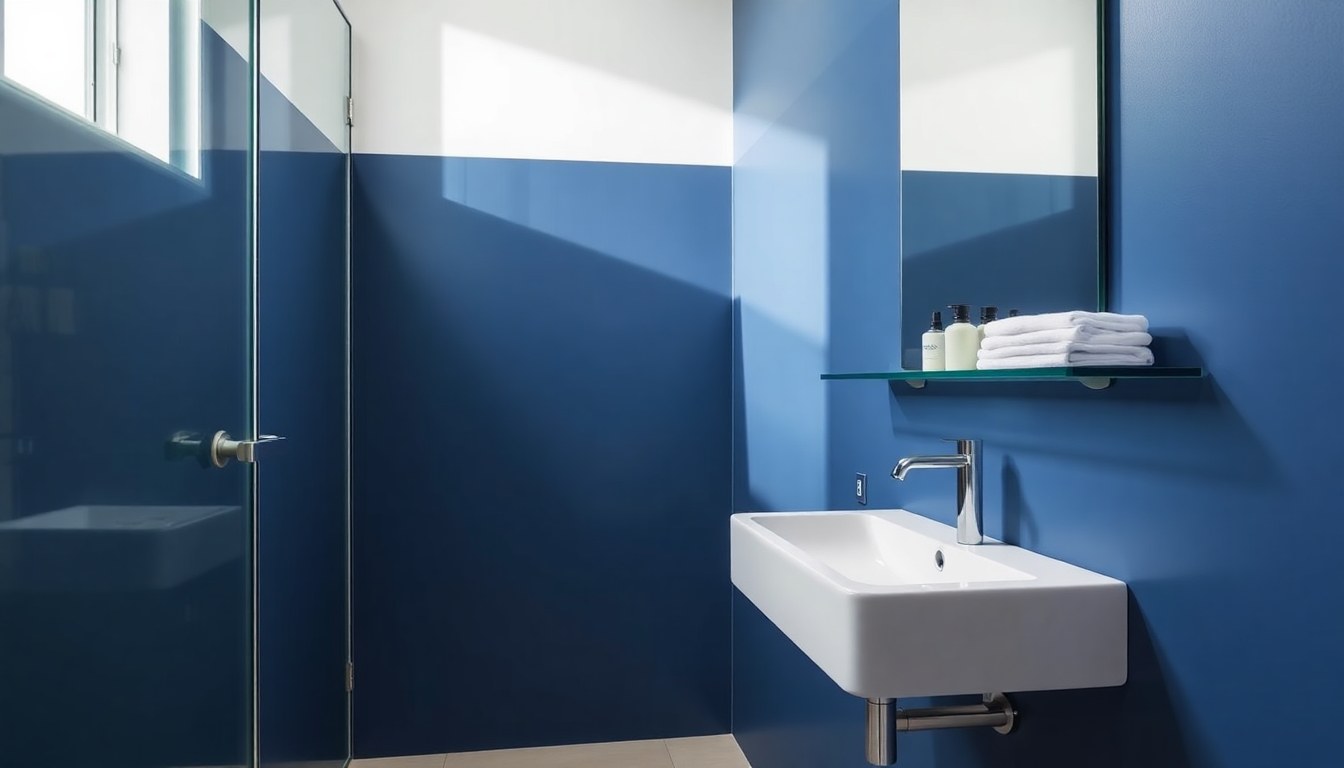
A 600 mm floating glass shelf above a Frazer Town vanity failed three weeks after handover—not because the glass cracked, but because the builder substituted 6 mm rawl plugs for the specified 10 mm chemical anchors and halved the bracket count. The shelf held a soap dispenser and two bottles until the homeowner added a fourth; the cantilever moment exceeded the pull-out strength, the drywall anchor tore free, and the 10 mm toughened glass hit the basin. For every architect specifying concealed-bracket floating shelves in Bangalore bathrooms, the question isn't whether toughened glass is strong enough—it always is—but whether the bracket spacing, anchor type, and substrate can carry the actual imposed load without deflection or pull-out.
Why 8 kg per linear foot is the working load for bathroom glass shelves
The 8 kg per linear foot figure comes from combining typical bathroom shelf loads with a safety factor that accounts for dynamic loading—bottles placed heavily, arms leaning during cleaning, accidental elbow strikes. A 600 mm shelf (roughly 2 linear feet) sees 16 kg distributed load in normal use: two 500 ml pump bottles, a toothbrush holder, a soap dish, occasional hand pressure. The shelf itself—10 mm toughened glass at 25 kg/m²—adds 1.5 kg for a 600×150 mm piece. Total static load sits around 18 kg; the bracket system must handle that continuously without visible deflection and survive a 50% overload during cleaning or accidental impact.
Deflection is the real enemy. A shelf that sags 2 mm under load looks wrong even if it's structurally safe, and any deflection telegraphs through the joint line between glass and wall tile. Most architects spec a maximum 1 mm deflection at center span under full load; that constraint, not shear strength, drives bracket spacing. For 10 mm toughened glass on 300 mm centers, two concealed brackets keep deflection below 0.8 mm at 16 kg total load. Stretch that to 450 mm centers and deflection doubles; the shelf looks tired within six months as the silicone joint opens and closes with humidity swings during Bangalore's June-to-September monsoon.
Concealed vs surface-mount brackets: tolerance and substrate requirements
Concealed brackets—typically stainless-steel pins or plates that insert into core-drilled holes or slots in the glass edge—create the true floating look but demand tight tolerance on both the glass and the wall. The bracket pin diameter is usually 12 mm for 10 mm glass; the hole in the glass is 13 mm, leaving 0.5 mm radial clearance. That clearance accommodates minor misalignment but requires the wall anchor position to be within ±1 mm of the shop drawing. If the tile setter didn't follow the RCP and the anchor lands 3 mm off, the glass either won't seat or will bind under load, concentrating stress at the hole edge. We've seen two Koramangala projects where the GC drilled anchors after tiling without a template jig; one shelf shattered during installation when the installer forced it onto misaligned pins.
Surface-mount brackets—L-shaped or U-channel profiles that cradle the glass bottom edge—forgive more site variation. The glass rests in a channel with 2-3 mm clearance and is typically locked with set screws through neoprene pads. Alignment tolerance opens to ±3 mm, and the bracket itself distributes load across 50-80 mm of glass edge instead of concentrating it at a 13 mm hole. The trade-off is visual: the bracket is visible, and in small Indiranagar bathrooms where every detail shows, that profile line can read heavy. For projects where the builder's site quality is uncertain or the substrate is questionable—common in fast-track Whitefield apartments—surface-mount brackets are the safer spec.
Anchor type by substrate: AAC, brick, and drywall
Anchor selection depends entirely on what's behind the tile. In Bangalore residential, you'll encounter three substrates: 150 mm AAC block (common in post-2015 construction), 115 mm red-clay brick (older Basavanagudi and Malleshwaram stock), and 12.5 mm gypsum board over steel stud (rare but appearing in some Sarjapur Road villas). AAC requires 10 mm×60 mm nylon frame-fixing anchors or two-part chemical anchors; the material's low density (550-650 kg/m³) means standard rawl plugs pull out under sustained cantilever load. Brick takes 8 mm sleeve anchors reliably if you hit the brick body, not the mortar joint. Drywall demands toggle bolts rated to 15 kg each or—better—blocking behind the board at shelf height; specify that blocking in the shop drawing if the bathroom design includes floating shelves.
Bracket spacing: the 300 mm rule and when to break it
Two brackets on 300 mm centers will support a 600 mm shelf at 8 kg per linear foot with deflection under 1 mm. Extend the shelf to 900 mm and you need three brackets—two at the ends and one at center—to maintain that deflection limit. The temptation on site is to save cost and skip the center bracket; deflection then jumps to 2.5 mm and the shelf visibly sags. We've measured this on a Jayanagar project where the contractor installed 1200 mm shelves with only two end brackets; the center sagged 3.2 mm under 24 kg load (four large bottles, a tissue box, and a hand towel stack). The homeowner noticed immediately, and the shelf had to be pulled and re-drilled.
For shelves longer than 750 mm, consider increasing glass thickness to 12 mm rather than adding a fourth bracket. The stiffness of a glass plate scales with the cube of thickness; going from 10 mm to 12 mm cuts deflection by 73% for the same load and span. The glass cost premium is roughly 30%, but you avoid the visual clutter of additional brackets and the risk of a fourth anchor misalignment. On a recent HSR Layout penthouse bath, we specified 12 mm glass on 400 mm bracket centers for a 1200 mm shelf; deflection measured 0.9 mm at full load, well within tolerance, and the clean two-bracket look held.
PVD-coated stainless brackets and Cauvery hard-water staining
Bangalore's Cauvery supply sits around 200-300 ppm TDS, enough to leave calcium carbonate spots on any exposed metal within weeks. Standard 304-grade stainless brackets develop a matte white film at screw heads and joint lines where water pools during cleaning. PVD (physical vapor deposition) coating—typically titanium nitride in brushed-gold or matte-black finish—creates a 2-3 micron ceramic layer that resists mineral adhesion and wipes clean. The coating adds 40% to bracket cost but eliminates the bi-monthly CLR scrub that homeowners otherwise face. For projects where our 3-piece wall-mount glass soap dispenser and hook set or the 24-inch rail towel warmer share the same finish family, PVD-coated brackets maintain a consistent material language across all bathroom hardware.
Specify PVD finish in the hardware schedule, not as an allowance or upgrade. If the bracket finish isn't locked at tender stage, the GC will substitute builder-grade chrome plate to save ₹800 per bracket, and six months post-handover the shelves will show corrosion spotting that no amount of cleaning fixes. We've seen this on three Bellandur projects where the interior designer specified "stainless steel brackets" without calling out PVD; the builder supplied standard 304 with chrome flash, and within one monsoon season every bracket showed rust bleed at the mounting screws.
Installation sequence: template, anchor, then glass—never reverse
The correct sequence is: verify substrate, mark positions from shop drawing, drill and set anchors, cure (if chemical), install brackets, then bring glass to site pre-edged and pre-drilled. Reversing that—drilling the glass on site to match "as-built" bracket positions—introduces three failure modes: the hole may land too close to the edge (minimum 25 mm required), the drill may chip the toughened surface and trigger delayed fracture, and the hole diameter may be oversized to compensate for misalignment, leaving the glass loose on the pin. Toughened glass cannot be drilled after tempering; any hole must be CNC-drilled in the annealed blank before the tempering cycle. If site dimensions shift and the pre-drilled glass won't align, the brackets must move or the glass must be re-fabricated—there is no field fix.
On a Hennur row-house project, the tile contractor finished 8 mm proud of the shop drawing datum because he added a mud bed the architect hadn't anticipated. The glass shelves, already drilled, no longer aligned with the bracket pins. The GC proposed drilling the glass on site with a diamond core bit; we rejected that and re-fabricated two shelves at cost, because field-drilled toughened glass fails NIC 5206 impact testing and voids any warranty. The lesson: confirm as-built wall dimensions before releasing the glass cutting file, and build a 5 mm Z-axis tolerance into the bracket pin length to absorb minor substrate variation.
Questions architects ask
Can I use concealed brackets on 8 mm glass instead of 10 mm to reduce weight?
Not for bathroom shelves longer than 450 mm. Eight-millimeter toughened glass deflects 56% more than 10 mm under the same load, and deflection—not breakage—is the governing limit. For a 600 mm shelf at 8 kg per linear foot, 8 mm glass will sag 1.8 mm at center span even with brackets on 300 mm centers, enough to look wrong and open the silicone joint. Use 8 mm only for shelves under 400 mm or where the load is purely decorative (a single small plant, no bottles).
What's the minimum edge distance for a bracket hole in toughened glass?
Twenty-five millimeters from hole center to any edge, per IS 2553. Closer than that and the residual surface compression from tempering can't fully develop around the hole, leaving the edge vulnerable to impact fracture. If your shelf depth is only 100 mm, the bracket hole must land at 25 mm from the back edge, leaving 75 mm of cantilever—check that the bracket pin length can handle that moment without the glass tipping forward.
Do I need to specify blocking in the wall if I'm using concealed brackets?
Only if the substrate is drywall over metal stud. AAC block and brick provide adequate pull-out resistance with the correct anchor. For drywall, call out 18 mm plywood blocking between studs at shelf height in the shop drawing; the blocking should span at least two stud bays and be screwed at 150 mm centers. Toggle bolts alone won't carry 16 kg cantilever load reliably—they'll hold for six months, then the drywall crushes and the toggle rotates.
How do I account for out-of-plumb walls when specifying bracket spacing?
Measure plumb at the shelf location during the pre-installation site visit and adjust bracket height, not spacing. If the wall leans 3 mm over 600 mm height, the top bracket may need to sit 3 mm farther from the back edge than the bottom bracket to keep the shelf level. Horizontal spacing (the 300 mm rule) stays constant; vertical alignment absorbs the plumb error. If the wall is more than 5 mm out over the shelf span, call for a plaster correction before bracket installation—you can't fix that with bracket shims.
Can surface-mount brackets carry more load than concealed pins?
Yes, because they distribute load across 50-80 mm of glass edge instead of concentrating it at a 13 mm hole. A well-engineered surface-mount U-channel bracket can handle 12 kg per linear foot on 10 mm glass without exceeding 1 mm deflection, roughly 50% more than concealed pins. If the shelf will carry heavy objects—stacked towels, multiple large bottles, a countertop appliance—specify surface-mount brackets and accept the visible profile. The glass won't fail, but a concealed-pin shelf will sag visibly under that load.
Spec a Bathqube enclosure
Bathqube engineers every accessory and fitting to the same tolerance and load standard as our shower enclosures: certified, warranted, and built for Bangalore site conditions. If you're specifying floating glass shelves for a Bangalore residential bath, request a configurator quote with bracket type, spacing, and anchor schedule called out—we'll provide a shop drawing that matches your as-built dimensions and substrate.


