Mirror de-misting on north-facing bathrooms: why lower wattage specs fail in Malleshwaram shaded rooms
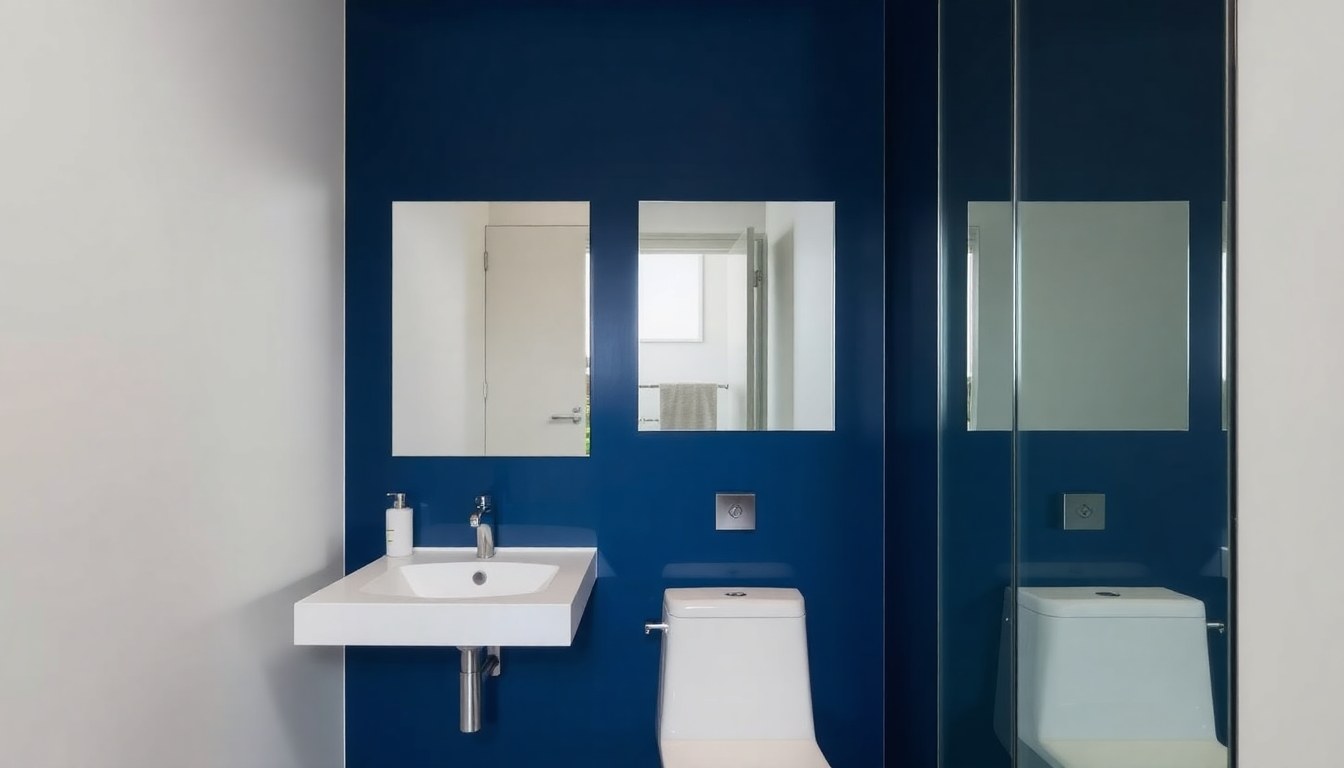
A 2.4 m × 1.8 m north-facing bathroom in Malleshwaram, specified with a 48" Rectangle LED Mirror and a standard 150W de-mister pad, fogged solid for 8 minutes after a morning shower in July. The architect's punch list item: "mirror stays clouded." The root cause was not the mirror glass or the pad itself—it was the thermal load calculation that ignored north-facing solar deficit and monsoon humidity. This note recalculates de-mister wattage for shaded Bangalore bathrooms and explains why lower specs create site friction and handover delays.
Why north-facing bathrooms are thermally different
Bangalore's monsoon season (June–September) brings sustained humidity and overcast skies. A north-facing bathroom receives no direct solar gain—the room stays cooler and wetter than a south or west-facing equivalent. Standard de-mister specifications assume ambient air temperature of 22–24 °C and relative humidity around 60%. In a north-facing Malleshwaram bathroom during monsoon, ambient sits closer to 20–21 °C with RH at 75–85%. The temperature differential between the mirror surface and the dew point widens, and the de-mister must work harder to drive surface temperature above saturation.
The Cauvery water supply to Bangalore carries TDS of 200–300 ppm—moderately hard. Post-shower, this mineral-laden steam condenses on the mirror and cools faster in a shaded, air-still north-facing room. A 150W de-mister rated for standard conditions cannot reheat the glass fast enough, and condensation re-forms before the pad cycles off.
Thermal load: the engineering calculation architects skip
De-mister pad selection is not subjective. The pad must supply enough thermal energy to raise the mirror surface temperature above the dew point, continuously, for the duration of the shower and 5–10 minutes after. The formula is straightforward:
Thermal load (W) = Mirror area (m²) × Heat loss coefficient (W/m²·K) × Temperature rise required (K)
For a 48" × 30" mirror (1.22 m × 0.76 m = 0.93 m²), a standard specification assumes 10–12 W/m² loss and a 5 K rise above dew point. That yields ~50–56 W minimum. Industry practice then applies a 2.5× safety factor for bathroom conditions, landing at 125–150 W.
Why the safety factor fails in north-facing rooms
The 2.5× factor assumes moderate ventilation and ambient air at 22–24 °C. In a north-facing Malleshwaram bathroom with no south-facing window and limited cross-ventilation, air circulation is poor and ambient temperature is 2–3 °C cooler. The heat loss coefficient rises to 14–16 W/m²·K, and the temperature rise required climbs to 7–8 K to exceed dew point. Recalculating:
Thermal load = 0.93 m² × 15 W/m²·K × 7.5 K = 104 W base load. Applying a 3× safety factor (not 2.5×) for poor ventilation and low ambient: 104 × 3 = 312 W. A 150 W pad is undersized by more than half.
Practical wattage recommendations for Bangalore north-facing specs
Bathqube's Capsule LED Mirror 36" × 24" and Capsule LED Mirror 30" × 22" both ship with de-mister pads. For a north-facing bathroom in Malleshwaram, Indiranagar, or Hebbal, use the following table as your specification baseline:
- Mirror area 0.6–0.8 m² (30"–36" wide): 250–300 W de-mister pad. Standard 150 W will underperform.
- Mirror area 0.8–1.2 m² (36"–48" wide): 300–400 W de-mister pad. 150 W is inadequate; 200 W is a minimum compromise.
- Mirror area 1.2+ m² (48"+ wide): 400–500 W de-mister pad. Specify 350 W minimum for monsoon performance.
These figures assume north-facing orientation, monsoon season operation (June–September), and no dedicated heated exhaust duct. If the bathroom has a south-facing transom window or a heated exhaust fan running during and 15 minutes after shower use, reduce the wattage by 20–25%. If the room is interior with no windows and relies on a standard bathroom exhaust fan, add 50 W to the specification.
Shop drawing and electrical checklist
When you specify a de-mister pad wattage above 250 W, the electrical load changes. A single 16 A, 230 V circuit branch can supply up to 3680 W, so a 300 W pad is not a circuit problem on its own. However, site coordination matters:
- Confirm the mirror's de-mister pad is on a dedicated circuit or shares only with low-draw devices (no water heater, no exhaust fan motor on the same branch).
- Request a shop drawing from the mirror supplier showing pad wattage, thermal cutoff rating, and terminal voltage. Bathqube's BIS-certified pads are factory-tested to IS 2553 standards and include thermal overload protection.
- Specify that the de-mister pad operates on a separate, wall-mounted on/off switch, not on the exhaust fan timer. Architects often wire them together to save a switch—this creates a punch list issue because the pad cannot run independently after the fan stops.
- On the RCP, note the de-mister circuit separately and confirm with the electrical contractor that the pad will be energized for 15 minutes post-shower, even if the exhaust fan cycles off after 20 minutes.
Monsoon performance and handover tolerance
In Bangalore's monsoon, a north-facing bathroom will show condensation on the mirror for the first 2–3 minutes of a hot shower, even with a correctly sized pad. This is not a defect—it is physics. The mirror surface temperature lags the air temperature by 90–120 seconds while the pad ramps up. Specify this in your handover punch list: "Minor fogging in first 2 minutes is normal; persistent fogging after 5 minutes indicates undersized pad or circuit fault."
If a site handover inspection reveals the mirror is still fogged at 8 minutes post-shower, the de-mister pad is either underpowered, not energized, or the room's humidity is so high that ventilation is the real bottleneck. Do not accept a lower-wattage pad as a compromise. Instead, specify a dedicated humidity sensor or timer that extends the exhaust fan runtime to 30 minutes post-shower in monsoon months. Bathqube's mirrors are engineered to spec—the site conditions must match the spec.
Questions architects ask
Can I use a 150 W pad if I install a heated exhaust duct?
Heated exhaust ducts are rare in Bangalore residential projects and add cost and complexity. A 150 W pad will still underperform in a north-facing room even with heated exhaust because the mirror surface temperature is determined by the pad's thermal output, not the air temperature. If the project budget allows, a heated duct is a nice-to-have; it is not a substitute for correct pad wattage. Specify the pad first; add the heated duct only if monsoon site trials show fogging persists.
What if the bathroom has a south-facing window? Can I reduce the wattage?
A south-facing window in a north-facing bathroom does not help—the window is on the wrong wall. If the bathroom itself is south-facing (the mirror wall receives afternoon sun), you can reduce the de-mister wattage by 20–25% because solar gain will assist the pad. Confirm the site orientation on your RCP before you reduce the spec.
Does the LED light in the mirror affect de-misting performance?
The LED light ring in a Designer Mirror or Designer Circular Mirror generates minimal heat—typically 8–12 W across the entire fixture. It does not contribute meaningfully to de-misting and should not be factored into the pad wattage calculation. The de-mister pad is a separate circuit and thermal element.
Why does Bathqube not offer a universal 250 W de-mister pad for all mirrors?
Mirror sizes vary from 30" to 60" wide, and thermal load scales with area. A 250 W pad on a 24" mirror would overheat the glass and waste energy; a 250 W pad on a 60" mirror would be undersized. Bathqube specifies pad wattage per mirror model and site orientation. When you request a quote, provide the bathroom orientation (north, south, east, west), monsoon usage (year-round or seasonal), and whether the room has dedicated ventilation. We will recommend the correct pad wattage and include it in the shop drawing.
Can I specify a de-mister pad retrofit on an existing mirror?
Retrofit pads are available, but they require careful electrical coordination and are not recommended for site-installed mirrors. A factory-integrated pad is engineered into the mirror's thermal design and electrical routing. If you are retrofitting, consult Bathqube's technical team with the mirror model, room orientation, and ventilation details. Retrofit pads carry a longer lead time and may not achieve the same performance as factory-integrated units.
Next steps
Spec a Bathqube mirror for your north-facing Bangalore bathroom project. Provide the site orientation, mirror dimensions, and monsoon usage in your inquiry, and we will send a shop drawing with the correct de-mister wattage, electrical circuit requirements, and handover performance tolerance. Get a configurator quote on our mirrors catalogue.


