Shower door sweep gasket compression: the 3mm floor-gap spec for Bellandur wet rooms
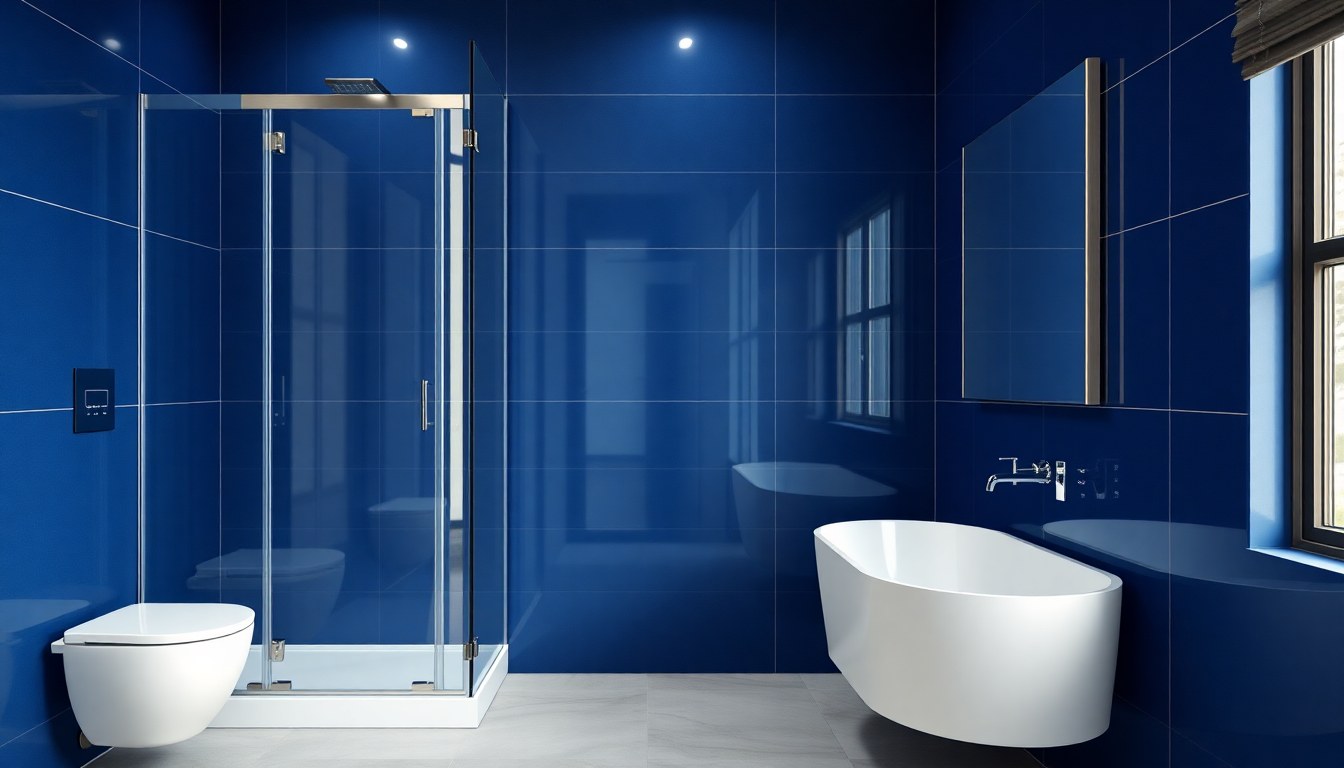
A hinged glass door swings open during final handover in a Bellandur apartment, and the bottom sweep gasket drags across the tile. The architect watches the door scrape, then checks the floor slope: 1:100 toward the drain, exactly as specified. The gap at the hinge side measures 5mm; at the latch side, 1mm. The seal works—no water escapes—but the uneven contact leaves a question: should the gasket have been set to uniform clearance, or is controlled compression the correct spec? For wet rooms with sloped floors, the answer determines both seal performance and door longevity.
Why zero clearance fails on sloped floors
A common site assumption: the tighter the door sits to the floor, the better the seal. That logic holds for interior doors on level thresholds, but wet-room floors slope 1:100 or 1:80 to the drain. A 900mm-wide door spanning that slope sees a 9mm to 11mm height differential between hinge and latch edges. If the sweep gasket is trimmed to achieve zero clearance at the low edge, the high edge lifts clear of the floor entirely. Water migrates under the door during use, especially when shower-head flow exceeds drain capacity—common in Bangalore's 200-litre-per-minute rain showers paired with 50mm floor drains.
The inverse approach—trimming the gasket to contact the high edge—creates excessive compression at the low edge. The gasket crushes, the door binds during swing, and hinge stress accelerates. Within six months, the gasket takes a permanent set, loses rebound, and no longer seals at either edge. Bathqube enclosures specify a 3mm nominal floor gap measured at the door's geometric centre when closed, allowing the gasket to compress 1-2mm at the low edge and maintain light contact at the high edge. That controlled differential keeps the seal active across the slope without overloading the material.
Gasket material and compression limits
Bathqube sweep gaskets use durometer-60A silicone, a shore hardness chosen for wet-room duty cycles. Softer gaskets—shore 40A or 50A—compress easily but lose memory under sustained load; harder gaskets—shore 70A or 80A—maintain shape but require higher closing force and stress hinges. At 60A, the gasket tolerates 30–40% compression before permanent deformation begins. For a gasket with a 6mm uncompressed height, that ceiling sits at roughly 2mm of deflection.
A 3mm floor gap, combined with a 1:100 slope over 900mm width, produces compression ranging from 1mm at the high edge to 2.5mm at the low edge—within the elastic limit. The gasket remains in contact across the full door width, forms a capillary barrier against sheet flow, and rebounds after each door cycle. This is not a zero-gap seal; it is a contact-pressure seal, and the distinction matters during installation. Site teams accustomed to leveling thresholds sometimes shim the door frame to eliminate slope-induced gaps, inadvertently transferring floor slope into frame racking. The correct sequence: confirm floor slope with a digital level, set the frame plumb, then trim the gasket to achieve 3mm centre-point clearance with the door closed.
Temperature and humidity effects on compression
Bangalore's monsoon months—June through September—raise ambient humidity above 80% in enclosed bathrooms. Silicone gaskets absorb negligible moisture, but the adhesive backing and the aluminum door rail both respond to temperature swings. A gasket installed in March, when daytime temperatures reach 34°C, may measure 3mm clearance. By July, with the bathroom cooler and the aluminum rail contracted 0.2mm per metre, the effective clearance increases slightly. This seasonal shift is small—typically under 0.5mm—but it reinforces the need for a clearance spec rather than a contact spec. A gasket set to zero clearance in summer will bind in winter; a gasket set to 3mm clearance year-round remains functional across Bangalore's 10°C annual temperature range.
Installation sequence for sloped floors
The gasket cannot be trimmed before the frame is set. Floor slope varies by as much as 2mm over a 900mm span, even on well-executed screeds, and the door's final position within the frame affects gasket geometry. Bathqube installation begins with frame anchor, then hinge mount, then door hang, then gasket trim—in that order.
First, confirm the finished floor slope with a 1-metre digital level placed parallel to the door swing. Record the reading in millimetres of drop per metre. Second, install the frame plumb in both planes; do not tilt the frame to match floor slope. Third, hang the door, check swing clearance, and verify that the door closes without frame contact. Fourth, with the door closed and latched, measure floor clearance at three points: hinge edge, centre, and latch edge. The centre-point measurement is the reference. If it reads 4mm, trim 1mm from the gasket foot. If it reads 2mm, leave the gasket as supplied. The target is 3mm ±0.5mm at centre.
The gasket is supplied 8mm longer than door width to allow field trimming. After trimming to length, peel the adhesive backing and press the gasket into the bottom rail channel, working from centre outward to avoid air pockets. Close the door and observe contact: the gasket should show a faint compression line across its width, darker at the low edge, lighter at the high edge. If no line appears, the gap is excessive; if the door resists closing, compression is excessive. Adjust in 0.5mm increments.
Drainage rate and seal duty cycle
A sweep gasket does not create a watertight seal in the hydrostatic sense—it is not a submarine hatch. Its function is to block sheet flow and contain splash within the enclosure while the floor drain evacuates water. Bangalore wet rooms typically specify 50mm or 75mm floor drains with flow capacity between 30 and 50 litres per minute at a 10mm water depth. A rain shower head flowing at 15 litres per minute, combined with a hand shower at 8 litres per minute, delivers 23 litres per minute to the floor—well within drain capacity under normal conditions.
Problems arise when the drain grate clogs with hair or soap residue, or when the trap is undersized relative to the shower head. Water depth at the door threshold rises from 2mm to 8mm, increasing hydrostatic pressure against the gasket. A gasket with 3mm clearance and 2mm compression at the low edge will begin to weep when standing water exceeds 6mm depth. This is not a gasket failure; it is a drainage-system failure. The correct response is to upsize the drain or add a second drain, not to over-compress the gasket. Bathqube shop drawings flag drain capacity when shower flow exceeds 20 litres per minute, and we recommend 75mm drains for all enclosures wider than 1200mm.
Hinge load and gasket friction
Every millimetre of gasket compression adds rotational resistance to the door swing. A door with zero floor clearance and 3mm gasket compression across its full width requires roughly 30% more closing force than the same door with 3mm clearance and 1.5mm average compression. That additional force transfers to the hinges as a bending moment, accelerating wear on the hinge pin and the frame anchor.
Bathqube enclosures use stainless-steel hinges rated for 40kg door weight with a 15,000-cycle duty life under normal load. "Normal load" assumes the door closes under its own weight from a 45° position—approximately 8–10 newtons of rotational force. When gasket friction doubles that force, hinge life drops to roughly 8,000 cycles, and the risk of frame pull-out increases on tile substrates with marginal anchor embedment. For Bellandur and Sarjapur Road projects, where builder-grade wall tile is common, this distinction matters. A 3mm floor gap reduces hinge load, extends service life, and lowers the probability of post-handover callbacks.
Field adjustment after six months
Silicone gaskets take an initial set during the first 500 door cycles—typically the first three to six months of occupancy. Compression zones compact slightly, and the gasket foot conforms to minor floor irregularities. After this break-in period, effective clearance may increase by 0.5mm. If the homeowner reports water escape, the gasket can be replaced or supplemented with a secondary wiper strip. Bathqube supplies replacement gaskets as a line item; they install in under ten minutes without removing the door. This is preferable to over-compressing the gasket at initial installation in an attempt to pre-empt future wear.
Tolerance stack-up in the installation chain
The 3mm floor-gap spec sits within a tolerance stack that begins with the structural slab and ends with the door latch. Slab flatness per IS 4326 allows ±3mm over a 2-metre span. Screed and tile add another ±2mm. Frame plumb tolerance is ±1mm per metre. Door sag under self-weight, even with properly torqued hinges, can reach 1mm over a 2000mm height. These tolerances do not sum linearly—they are partially independent—but together they create a potential 5mm variation in effective floor clearance across an enclosure.
Specifying a 3mm nominal gap provides a 1.5mm buffer in each direction. If the low edge of the door ends up at 1.5mm clearance due to accumulated tolerance, the gasket still compresses within its elastic range. If the high edge ends up at 4.5mm clearance, the gasket maintains light contact and the capillary barrier holds. Tighter specs—1mm nominal gap, for example—leave no margin for real-world variation and result in either gasket overload or loss of seal, depending on which way the tolerances stack.
This is why Bathqube shop drawings call out the 3mm dimension as a nominal value with a ±1mm tolerance band, and why we train installation teams to measure at centre-point rather than at edges. The centre-point reading averages out local floor irregularities and provides a repeatable reference for field adjustment.
Questions architects ask
Can I specify a 1mm gap to minimize water escape on a steep slope?
A 1mm gap over-compresses the gasket at the low edge, especially on 1:80 slopes, and the gasket will take a permanent set within six months. The resulting loss of rebound actually increases long-term leakage risk. Better to spec a 3mm gap and confirm the floor drain can handle peak flow—that addresses the root cause rather than over-stressing the seal.
What if the floor installer missed the 1:100 slope spec and delivered a flat floor?
A flat floor simplifies gasket installation—you can trim to uniform clearance—but it creates a drainage problem. Standing water will pool at the door threshold, and even a well-compressed gasket will weep under sustained depth. The correct fix is to re-slope the floor or add a linear drain along the door line. Do not attempt to solve a drainage error with a gasket adjustment.
How do I verify gasket compression during final inspection?
Close the door, then slide a 0.5mm feeler gauge under the gasket at the low edge. It should not pass. Slide a 2mm feeler gauge under the gasket at the high edge. It should pass with light resistance. If both conditions are met, compression is within spec. If the 2mm gauge does not pass at the high edge, the gasket is over-compressed; trim 0.5mm from the foot and re-check.
Do frameless and semi-frameless doors use the same gasket spec?
Yes. The 3mm floor-gap spec applies to both configurations. Frameless doors use a gasket bonded directly to the glass bottom edge; semi-frameless doors use a gasket in an aluminum bottom rail. The material and durometer are identical, and the compression logic is the same. The only difference is the installation method—frameless gaskets require a clean glass edge and a 24-hour adhesive cure before the door is hung.
Can I reduce the gap to 2mm if the homeowner insists on a tighter seal?
You can, but document the decision and inform the homeowner that gasket service life will be shorter and hinge load will be higher. A 2mm gap with 1:100 slope produces up to 3mm compression at the low edge—right at the elastic limit for shore-60A silicone. The gasket will function, but it will require replacement sooner, and the door may require hinge adjustment within the first year. If water containment is the concern, the better solution is to verify drain capacity and add a secondary wiper if needed.
Spec a Bathqube hinged enclosure with engineered gasket compression for your next Bellandur or Whitefield wet room, or request a shop drawing with floor-slope tolerance callouts through the online configurator. We'll dimension the gasket to your as-built floor survey and provide field-adjustment guidance for your installation team.


