Shower niche depth vs tile plane: the 100mm rule for Bellandur site supervisors
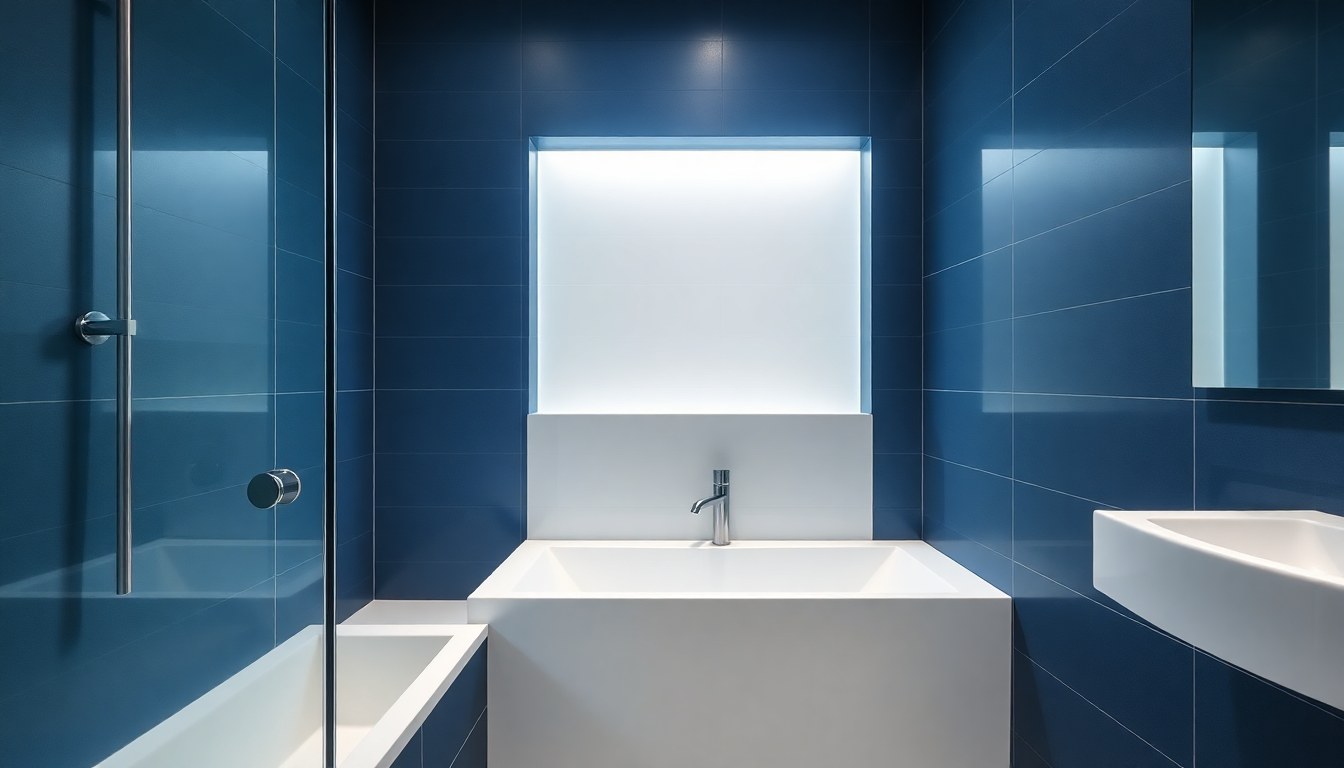
On a Bellandur row-house site last month, a mason chipped a 75mm recess into the shower wall for the niche — exactly the depth the architect had marked on the RCP. The tile contractor arrived two weeks later, laid 12mm vitrified tile on a 6mm bed, and the niche sat 18mm proud of the finished wall. The punch list now includes a full re-cut or a surface-mount shelf that nobody specified. The misread: the architect's 75mm was niche internal depth, not rough-in from brick face. For a flush install, the rough-in should have been 100mm.
Why niche depth is measured two ways — and why site teams confuse them
A shower niche has two depth dimensions. Internal depth is the usable shelf space inside the niche, typically 75mm to 100mm for shampoo bottles. Rough-in depth is the total recess from the brick or block face, which must account for tile thickness, adhesive bed, and any waterproofing membrane build-up. On a shop drawing, architects usually call out internal depth because that's what the user experiences. On site, masons read that number and cut the recess to match — forgetting that tile and bed will eat into it.
The 100mm rule is shorthand for this: if you want a 75mm internal niche depth and you're tiling with standard 12mm vitrified tile on a 6mm bed, your rough-in from brick face is 75mm + 12mm + 6mm + 7mm (back-wall tile + bed inside the niche) = 100mm. The extra 7mm accounts for the tile and thin bed inside the niche itself, which is often forgotten. If the niche back wall is left as raw brick or a single coat of waterproofing, you can trim that 7mm, but most Bangalore tile contractors finish the niche interior with the same tile to maintain the wet-area envelope.
The as-built surprise
When the rough-in is under-cut, the niche frame or liner protrudes past the tile plane. If it's over-cut, the niche sits recessed and collects water at the sill, especially in the sloped-floor showers common in Koramangala and Indiranagar projects. Either condition shows up at handover and becomes a change-order argument. The fix — re-cutting masonry after tile is laid — is expensive and risks cracking adjacent tile, particularly in the thin-bed installs now standard across Whitefield and Sarjapur Road projects.
The math: tile thickness + bed + niche back finish
Start with your tile spec. Vitrified porcelain in 600×1200mm format runs 10mm to 12mm thick; natural stone (Jaisalmer, Kota) can be 15mm to 20mm if honed. Adhesive bed thickness depends on substrate flatness and tile size. A well-floated brick wall with large-format tile takes a 4mm to 6mm bed; an uneven block wall or small mosaic can need 8mm to 10mm. Waterproofing membranes (Fosroc, Dr. Fixit two-part) add negligible thickness — usually under 1mm — but if you're using a bonded sheet membrane like Schluter Kerdi, add another 1mm.
Inside the niche, the back wall and sides are typically finished with the same tile. That's another 12mm tile + 4mm bed on the back plane, because the bed can be thinner on a small, controlled surface. Total build-up on the back wall: 16mm. So if your internal depth target is 75mm, rough-in = 75mm + 18mm (face tile + bed) + 16mm (niche back tile + bed) = 109mm. Round to 110mm to give the tile contractor a 1mm to 2mm tolerance for bed variation. In practice, most Bangalore architects call 100mm rough-in for a 75mm niche when using 12mm tile, accepting a slightly shallower final depth in exchange for simpler site communication.
When to add tolerance
If the brick wall is out of plumb by more than 5mm over the 2-meter shower height — common in speed-build Yelahanka and Devanahalli projects — the tile bed will vary to bring the face plane true. In that case, add 5mm to your rough-in and let the tile contractor feather the bed. Mark the niche rough-in as 105mm ±2mm on the shop drawing, and call out that the tolerance is to accommodate wall plumb correction, not mason discretion.
The common misread: RCP vs shop drawing vs site instruction
On an RCP, niche depth is often called out as a single dimension — "75" or "100" — without specifying internal vs rough-in. The section detail may clarify, but if the mason is working from a printed RCP alone, he'll cut 75mm from brick face and move on. Two weeks later, the tile contractor discovers the error, and the fix becomes a negotiation over who owns the re-work cost.
The clearest fix: issue a separate shop drawing for the shower niche, showing three dimensions: rough-in from brick face, internal depth after tile, and niche height/width. Call out tile thickness and bed thickness as assumptions, so if the tile spec changes, the rough-in can be recalculated. On Bellandur and Marathahalli sites where multiple sub-contractors cycle through, a one-page niche detail with a dimensioned section prevents the misread entirely.
Who owns the dimension
In most Bangalore contracts, the architect issues the RCP and section, the tile contractor issues the tile layout and bed spec, and the plumber or GC coordinates the niche rough-in. That three-way handoff is where the dimension gets lost. If you're specifying a Bathqube enclosure with integrated niche blocking or a prefab niche liner, the rough-in dimension comes from our shop drawing and the tile contractor works to that. If you're site-building the niche in brick or cement board, you own the rough-in callout and should mark it clearly: "100mm rough-in from brick face for 75mm internal depth, assuming 12mm tile + 6mm bed."
The fix when the mason gets it wrong
If the rough-in is 10mm to 15mm shallow, the tile contractor can sometimes recover by thinning the bed inside the niche to 2mm or 3mm and using a thinner tile on the niche back wall — 8mm porcelain instead of 12mm vitrified. That buys back 8mm to 10mm of internal depth. The risk: a thin bed on a small surface can delaminate under thermal cycling, especially in a steam shower or a west-facing Jayanagar bathroom that hits 35°C in summer. If you go this route, specify a high-bond polymer-modified adhesive (Laticrete 254, MYK Laticrete) and a full-coverage trowel notch.
If the rough-in is more than 15mm off, the only durable fix is to re-cut the recess or switch to a surface-mount niche. Re-cutting after tile is risky — vibration can crack adjacent tile, and dust control in an enclosed shower is difficult. Surface-mount niches (stainless-steel or powder-coated frames) work, but they read as an afterthought and collect water at the bottom edge unless you slope the sill or add a drip groove. On high-end Sadashivanagar and Indiranagar projects, that's usually unacceptable, and the niche gets re-cut.
The prefab niche option
Prefabricated niche liners in stainless steel or PVC eliminate the tile-inside-the-niche variable. The liner is a single waterproof box that drops into the rough-in; the tile stops at the niche perimeter, and the interior is the liner finish. Rough-in for a prefab niche is simpler: niche external depth + tile thickness + bed. For a 100mm-deep liner with 12mm tile and 6mm bed, rough-in is 100mm + 18mm = 118mm. The trade-off: prefab niches read as distinct material breaks, which some architects avoid in seamless-tile showers. On Bathqube projects, we often pair a prefab niche with our wall-mount glass soap dispenser and hook set to maintain a clean accessory language without relying on recessed tile niches.
Niche placement and the showerhead center-line
Niche depth is one variable; placement is another. A niche centered on the showerhead at 1200mm to 1400mm height is within easy reach, but it's also in the direct spray zone if the showerhead is a rain panel or a wall-mount with wide coverage. Water pressure in Bellandur and Whitefield ranges from 2 bar to 4 bar depending on whether the building has a sump-and-pump or direct corporation supply; at 3 bar, a 200mm rain panel can spray 400mm laterally. If the niche is in that cone, shampoo bottles get rinsed every shower and the niche sill never dries, leading to soap-scum build-up and, in hard-water areas, calcium deposits.
Offset the niche 300mm to 400mm laterally from the showerhead center-line, or place it on the side wall if the shower is 900mm wide or more. In a 900×1200mm enclosure — common in JP Nagar and Banashankari projects — the long wall is the better niche location, keeping it out of the spray and closer to the user's hand when standing under the showerhead. Mark the niche center-line on the RCP relative to the showerhead rough-in, not to the door or the corner, so the tile contractor can lay out from a fixed reference.
Waterproofing continuity at the niche perimeter
A recessed niche is a plane change in the waterproofing envelope. If the membrane is a trowel-applied cementitious coat (Dr. Fixit, Fosroc), it must be applied to the niche interior and lapped over the niche perimeter onto the main wall in a continuous coat. If the membrane is a bonded sheet (Schluter Kerdi, Laticrete Hydro Ban Sheet), the installer must cut and fold the sheet into the niche, with overlapped seams at the corners and a bead of sealant at the perimeter. Both methods work, but the sheet system is less forgiving of rough brick edges — a common condition in fast-track Hebbal and Electronic City sites.
The niche sill is the critical detail. It should slope toward the shower floor at 2° to 5° so water doesn't pool. If the niche is cut into brick, the mason should trowel the sill to a slight slope before the waterproofing coat. If you're using a prefab niche, check that the sill is factory-sloped or specify a site-applied mortar bed to create the slope. On Bathqube enclosures with wall-mount electric towel warmers adjacent to the shower, we often see condensation migrate from the warm towel bar to the cool niche if the niche sill is flat and holds water — another reason to slope it.
Questions architects ask
If I change from 12mm vitrified tile to 8mm porcelain mid-project, does the niche rough-in change?
Yes. If rough-in was set at 100mm for 12mm tile and you switch to 8mm, the face tile + bed drops from 18mm to 14mm (assuming the bed stays at 6mm). The niche will now sit 4mm recessed from the tile plane unless you tell the mason to cut the rough-in to 96mm. If the recess is already cut, the tile contractor can pack the bed inside the niche by 4mm to bring the niche face flush, but that risks a thicker joint line at the niche perimeter. Easier to lock the tile spec before rough-in.
Can I install a niche in a glass-block or cement-board wet wall?
Cement board (Hardie Backer, Wedi Board) is niche-friendly — cut the opening with a jigsaw, frame it with treated timber or metal studs, and apply waterproofing as usual. Glass block is not; the block is structural and cutting a recess mid-wall compromises the panel. If you're using glass block for privacy or light in a Frazer Town or Basavanagudi bathroom, specify a surface-mount niche or a corner caddy instead.
What's the maximum niche width before I need a lintel?
In a 100mm or 115mm brick wall, a niche wider than 450mm should have a lintel — either a steel angle or a reinforced concrete beam — above the opening to carry the load. Most single-bottle niches are 300mm to 400mm wide and don't need a lintel. If you're specifying a full-width niche (900mm or more) for a double-head shower, coordinate with the structural engineer and call out the lintel on the shop drawing. In a stud-and-board wall, the framing carries the load and no separate lintel is needed, but the niche perimeter should land on studs or blocking.
Should the niche interior be finished with the same tile as the shower wall?
It's the most common spec because it maintains waterproofing continuity and a uniform appearance. The alternative — a contrasting tile, natural stone, or a prefab liner — creates a material break that some architects use as an accent. On Koramangala and Sadashivanagar projects, we've seen niche interiors in honed Kota stone or matte black porcelain as a contrast to glossy white subway tile on the main wall. Structurally, both work; aesthetically, it's a design choice. Just remember that if you use a different tile inside the niche, its thickness and bed must be factored into the rough-in calculation.
How do I prevent calcium build-up on the niche sill in hard-water areas?
Bangalore Cauvery water runs 200 to 300 ppm TDS, which leaves calcium and magnesium deposits on any surface that stays wet. Slope the niche sill so water drains, and specify a tile with low porosity (porcelain, vitrified) rather than natural stone, which is more porous. A squeegee wipe after each shower helps, but that's user behavior, not specification. Some architects specify a niche sill in solid-surface material (Corian, Staron) or engineered quartz, which is non-porous and easier to wipe clean, though it adds a material seam at the sill-to-wall joint.
Spec a Bathqube enclosure
If you're working on a Bangalore residential project and want a shower enclosure engineered to site dimensions with niche blocking, waterproofing laps, and tolerance callouts that your tile contractor can work to, request a Bathqube configurator quote. We'll issue a shop drawing with rough-in dimensions, a material schedule, and a punch-list checklist for handover. Every enclosure is BIS-certified, 10-year warrantied, and built to your as-built.


