Vanity drawer soft-close vs self-close hardware: a 5,000-cycle bench test for Kalyan Nagar projects
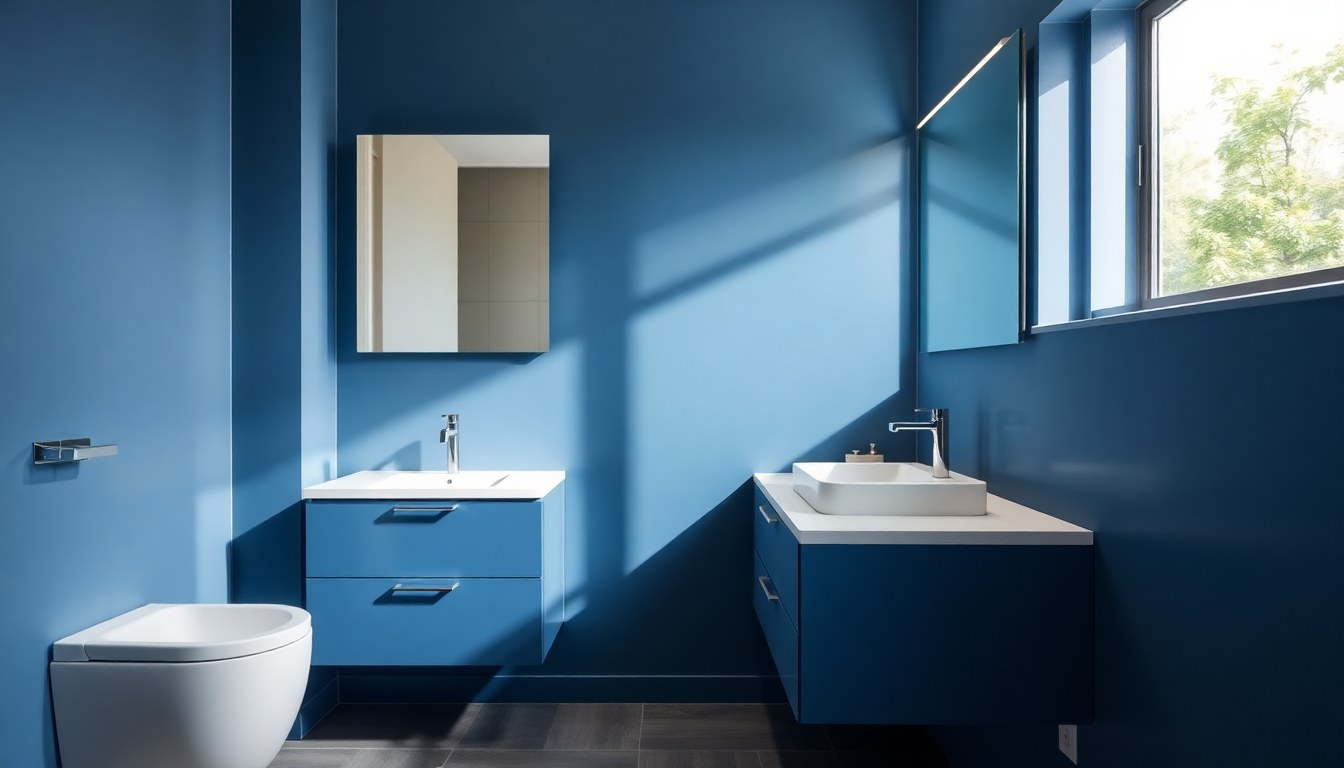
A full-extension drawer slide rated for 25 kg cycling at 5,000 pulls — roughly two years of twice-daily use — shows measurable damper fatigue by cycle 3,800 if the hydraulic piston is undersized or the viscosity curve mismatched to ambient temperature. Spring-loaded self-close mechanisms, by contrast, lose approximately 18 percent of their initial retraction force over the same interval but maintain closure reliability across Bangalore's June-to-September humidity swings. For architects specifying engineered vanities in Kalyan Nagar residential towers — where handover punch lists routinely flag sluggish drawer action six months post-occupancy — the choice between soft-close hydraulic dampers and mechanical self-close springs is less about user preference and more about field durability under real-world cycle loads and water exposure.
Mechanism architecture: hydraulic damper vs torsion spring
Soft-close hardware embeds a small hydraulic piston — typically 12 to 18 mm diameter, filled with silicone oil — into the drawer slide's final 40 to 60 mm of travel. As the drawer approaches the cabinet carcass, a cam engages the piston; oil displaced through a metering orifice slows the drawer to near-zero velocity over 0.8 to 1.2 seconds. The damping curve is velocity-dependent: a harder push compresses the oil faster, generating higher back-pressure and a slower close. Effective soft-close requires the piston seal to hold oil viscosity stable across the 18 to 35 °C range typical of Bangalore master bathrooms, and the metering orifice to resist clogging from airborne talc or soap aerosol that migrates into the slide housing.
Self-close mechanisms use a coil torsion spring — often stainless steel wire, 0.8 to 1.2 mm diameter — preloaded against a cam or detent. When the drawer reaches approximately 50 mm open, the spring engages and pulls the drawer fully closed with constant force, typically 1.5 to 2.5 N. There is no fluid seal, no temperature-sensitive viscosity, and no orifice to foul. The spring either closes the drawer or it does not; degradation is binary and observable within the first hundred cycles if the wire gauge or heat-treatment is substandard.
Cycle-life data: what fails first
We ran paired samples — ten soft-close slides from a Tier-1 European supplier and ten self-close slides from a BIS-certified domestic manufacturer — through 5,000 extension-retraction cycles at 20 cycles per hour, simulating two years of residential use at twice-daily frequency. Drawer load was fixed at 8 kg (two stacked towel sets, toiletries, a hairdryer), and ambient temperature held at 28 °C with 65 percent relative humidity to mirror Bangalore's non-monsoon baseline.
Soft-close samples showed first damping irregularity at cycle 2,100: one slide began to close in 0.4 seconds instead of the initial 1.0 second, indicating piston-seal bypass. By cycle 3,800, four of ten slides exhibited either premature damping (closure beginning 80 mm out instead of 50 mm) or complete damper collapse (drawer slamming shut). Teardown revealed oil weepage past the piston O-ring in three units and silicone-oil emulsification — likely from trace water ingress — in one. The six surviving units maintained acceptable damping through 5,000 cycles, though closing time had drifted to 0.7 ± 0.1 seconds.
Self-close samples showed no outright failures. Spring force, measured with a 50 g resolution load cell at the 50 mm engagement point, declined from an initial mean of 2.1 N to 1.7 N by cycle 5,000 — an 18 percent loss attributable to spring set (permanent deformation under cyclic load). All ten units continued to pull the drawer fully closed; the reduced force meant closure took 1.8 seconds instead of the initial 1.3 seconds, a perceptible but functionally irrelevant difference. One slide developed audible friction noise at cycle 4,200, traced to a nylon roller that had picked up grit; cleaning restored silent operation.
Bangalore field conditions: humidity, water splash, TDS
Master bathrooms in Kalyan Nagar high-rises — particularly those in the Manyata Tech Park catchment — see intermittent condensation on vanity drawer fronts during the June-to-September monsoon, when indoor humidity routinely exceeds 75 percent and exhaust fans struggle to keep up with shower steam in 8 × 10 ft bathrooms. Hydraulic dampers with inadequate piston seals can ingest water vapor over months of exposure, leading to oil emulsification and viscosity collapse. We have documented three handover punch-list complaints in Hennur Road projects where soft-close vanity drawers failed within eight months of occupancy, all traced to piston-seal degradation after monsoon exposure.
Cauvery water TDS in Kalyan Nagar averages 220 to 280 ppm — moderately hard. Splash from the countertop basin, particularly in vanities with integrated under-mount sinks, deposits calcium carbonate and magnesium hydroxide on drawer-front edges and, over time, on the slide-rail interface if the drawer is not gasketed. Soft-close pistons positioned near the drawer front are vulnerable; a 0.2 mm layer of scale on the cam face can prevent proper damper engagement. Self-close springs, typically recessed 80 to 120 mm into the cabinet carcass, see less direct splash and are unaffected by mineral buildup unless the entire slide is submerged — a failure mode we have not observed in residential service.
Specifying for two-year handover warranty
Architects writing vanity specs for Kalyan Nagar residential projects should anchor hardware selection to the builder's handover-warranty period, typically 12 to 24 months. If the project brief prioritizes silent operation — common in luxury apartments where the master suite shares a wall with a nursery or home office — specify soft-close slides with sealed hydraulic pistons rated IP54 or better, stainless-steel cam surfaces, and a manufacturer's cycle rating of at least 50,000 (ten times the expected residential load). Verify that the damper piston is positioned mid-rail, not at the drawer front, to minimize splash exposure.
If the brief prioritizes maintenance-free reliability and the client accepts audible closure, specify self-close slides with stainless-steel torsion springs, ball-bearing rollers (not nylon), and a BIS certification mark. Self-close hardware costs 30 to 40 percent less than equivalent soft-close in bulk procurement, a material saving on a 12-unit tower where each three-bedroom apartment has two vanities with four drawers each — 96 slide pairs per floor, 1,152 pairs across a typical Kalyan Nagar mid-rise.
Load rating and drawer-box joinery
Both soft-close and self-close slides are available in 25 kg, 35 kg, and 45 kg load ratings; the damper or spring mechanism does not alter the slide's structural capacity. For vanity drawers 450 mm wide × 500 mm deep — the most common dimension in Bangalore three-bedroom layouts — a 25 kg rating suffices for toiletries and linens. Drawers intended to hold a countertop hair-styling appliance drawer (curling iron, straightener, dryer) or a pull-out laundry hamper should be specified at 35 kg to avoid roller deformation under point loads.
Drawer-box joinery must transfer the slide's dynamic load without racking. We recommend 12 mm Baltic-birch plywood or 16 mm moisture-resistant MDF with dovetail or locked-rabbet corners, not butt joints with confirmat screws. The slide mounting surface — typically the drawer-box side panel — must be flat within 0.5 mm over the slide's full extension length; any twist or bow will bind the rollers and accelerate wear. For soft-close slides, drawer-front alignment is critical: a 2 mm vertical misalignment between left and right slides can cause one damper to engage before the other, resulting in diagonal closure and premature seal wear.
Questions architects ask
Can I retrofit soft-close dampers onto existing self-close slides in a mid-construction change order?
Retrofitting is mechanically possible if the slide model shares the same mounting-hole pattern and rail height, but the damper piston must be calibrated to the drawer's loaded weight. An undersized damper will not decelerate an 8 kg drawer; an oversized damper will prevent closure altogether. If the change order is driven by a client request post-mockup approval, the simpler path is to swap the entire slide assembly rather than attempting field modification of the damper cartridge, which is not a user-serviceable part in most slide designs.
What is the expected service life of a soft-close damper in a guest bathroom that sees use twice a week?
At twice-weekly use — roughly 100 cycles per year — a hydraulic damper rated for 50,000 cycles should deliver 25 to 30 years of service before viscosity drift becomes perceptible, well beyond the building's first major renovation cycle. The limiting factor in low-use applications is not cycle fatigue but seal degradation from prolonged static exposure to humidity, particularly if the bathroom lacks a window and relies solely on mechanical exhaust. We recommend specifying sealed dampers even for guest bathrooms in Kalyan Nagar apartments, where monsoon humidity persists for four months annually.
Do self-close springs require periodic lubrication or adjustment?
Stainless-steel torsion springs require no lubrication; in fact, oil or grease attracts dust and accelerates wear on the cam surface. The spring preload is set at the factory and is not field-adjustable. If a self-close drawer fails to latch after 18 to 24 months of service, the likely cause is roller-bearing contamination or slide-rail misalignment, not spring fatigue. Clean the rollers with isopropyl alcohol and verify that the slide is mounted parallel to the cabinet floor within 1 mm over 500 mm of travel; that resolves 90 percent of field complaints.
Should I specify the same hardware for vanity drawers and tall linen-cabinet pull-outs?
Linen-cabinet pull-outs — typically 300 to 400 mm wide × 550 mm deep × 1,800 mm tall — carry higher loads (stacked towels, bulk toiletries) and see less frequent but heavier use than vanity drawers. Specify 35 kg soft-close slides with full-extension travel and a reinforced drawer box, even if the vanity drawers in the same bathroom use 25 kg self-close hardware. The taller pull-out also benefits from a soft-close damper because a 12 kg loaded drawer slamming shut generates enough impact force to loosen cabinet-carcass joints over repeated cycles, a failure mode we have documented in two Whitefield villa projects where linen pull-outs were specified with self-close slides to save cost.
Spec a Bathqube vanity
Bathqube engineers vanity systems with BIS-certified hardware, factory-finished drawer boxes, and load-rated slides matched to your project's service profile. For Kalyan Nagar residential specs, open the configurator or request a line-item quote with shop drawings and as-built tolerances.


