Vessel sink overflow diameter vs faucet spout height: the 50mm rule for Indiranagar counters
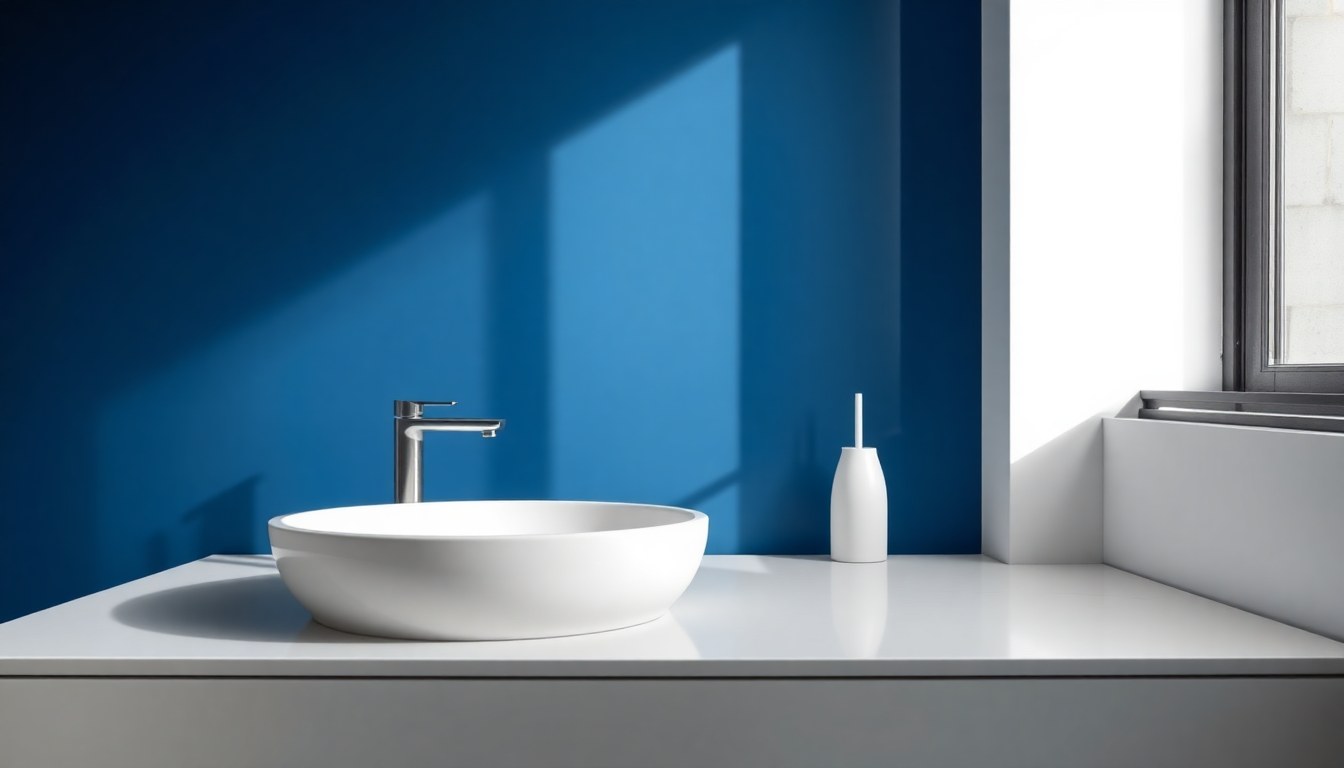
A vessel sink sitting on a counter with a wall-mounted faucet looks simple on the elevation. It is not. The arc of the spout must clear the overflow hole—typically 40mm diameter—while the water column lands inside the basin rim. Miss that clearance by 15mm and you are punching a new hole or specifying a different faucet. This note walks the tolerance stack for Bangalore residential projects, where Cauvery hard water (TDS 200–300 ppm) and monsoon humidity (June–Sept) make fixture placement non-negotiable.
The geometry problem: spout arc and overflow hole alignment
A standard vessel sink has an overflow opening 40mm in diameter, positioned on the basin wall 80–120mm below the rim. A wall-mounted faucet spout reaches out 150–200mm from the wall and curves down into the sink. The spout outlet sits 25–50mm above the rim when installed to spec. The problem: if the spout arc passes directly over the overflow hole, water splashes out during high-flow use, or the spout nozzle physically contacts the rim.
Bathqube's engineering spec for wall-mount faucets over vessel sinks requires a minimum 50mm horizontal offset between the overflow hole centre and the spout outlet vertical projection. This is not a recommendation. It is a tolerance requirement written into the shop drawing. Architects and interior designers who specify Bathqube faucets receive this offset pre-calculated in the fixture schedule and RCP notes.
Why 50mm is the minimum offset for Bangalore counters
Spout outlet diameter and water jet spread
Most wall-mount faucets in the 200–400mm reach category have a spout outlet 18–24mm in diameter. Water exiting at 0.5–1.2 litres per minute spreads into a cone approximately 35–45mm wide at the basin rim level. A 40mm overflow hole, when positioned directly beneath the spout arc, catches splash and mist. In Bangalore's humidity (especially monsoon), that splash migrates along the counter and into the cabinet below, creating mould risk in MDF or plywood base units.
The 50mm offset ensures the primary water jet lands 50mm away from the overflow hole centre. Secondary splash and mist still reach the hole, but at low velocity—the basin rim and interior bowl geometry dissipate the energy before water reaches the overflow threshold. This is a passive safety measure, not an aesthetic preference.
Counter depth and wall-to-rim distance
Indiranagar and Koramangala projects typically specify 600mm-deep counters with a 40–50mm overhang. The wall-to-rim distance is 550–560mm. A faucet with 180mm reach and a 45mm spout height (above rim) creates a ballistic arc that drops into the sink 150–160mm from the wall. If the overflow hole is positioned at 120mm from the wall (a common default on imported sinks), the spout outlet is only 30–40mm away horizontally. This violates the 50mm rule and requires either a different sink or a different faucet reach.
Architects who specify vessel sinks must confirm overflow hole position—measured from the wall face to the hole centre—before finalizing the faucet model. This dimension is rarely called out on sink shop drawings. Request it explicitly from the sink supplier. Bathqube's specification team can then calculate the required faucet reach and spout height to meet the 50mm offset without site modification.
BIS compliance and load rating under spout pressure
Bathqube wall-mount faucets are BIS-marked to IS 2553 (Metallic and PVD-coated Plumbing Fittings) and carry a 10-year warranty. The certification includes load testing: a spout rated for 10 litres per minute at 3 bar pressure must not deflect more than 2mm under that load. This matters because a spout that sags toward the overflow hole during use creates a secondary tolerance problem—the 50mm offset shrinks to 35–40mm in real time.
Specify faucets that carry the BIS mark and request the load-deflection certificate from your supplier before approving shop drawings. Counterfeit or non-certified faucets often have spouts that flex 4–6mm under pressure, which erases the offset margin entirely. In Bangalore's tech-corridor residential boom, where project timelines are compressed and site supervision varies, this is a punch-list item that costs money to fix late.
Overflow hole diameter variation and sink selection
Not all vessel sinks have a 40mm overflow hole. Some European imports (common in Whitefield and Sadashivanagar projects) use 35mm holes; others use 45mm. A larger hole requires a larger offset, because the water jet spread must clear the entire hole perimeter. The rule of thumb: add 5mm to the offset for every 5mm increase in hole diameter above 40mm. A 45mm hole requires a 55mm offset; a 50mm hole requires a 60mm offset.
Bathqube's faucet range includes models with reach from 160mm to 220mm and spout heights from 30mm to 70mm above rim. Each combination produces a different arc trajectory. Before specifying, confirm the sink overflow diameter and position, then select the faucet model that delivers the required offset. Do not assume all wall-mount faucets are interchangeable with all vessel sinks.
Hard water, mineral deposit, and spout maintenance in Bangalore
Cauvery water in Bangalore carries calcium and magnesium ions (TDS 200–300 ppm). Over 12–18 months, mineral deposits build up inside the spout outlet, narrowing the jet diameter from 20mm to 16–18mm. A narrower jet concentrates water velocity and changes the spread angle—what was a 40mm cone becomes a 25–30mm pencil jet. This jet now passes directly through the overflow hole even if the original offset was correct.
Specify spout outlets with aerator cartridges that can be removed and cleaned without tools. Bathqube faucets use press-fit aerators rated for quarterly cleaning. Include cleaning instructions in the homeowner handover pack. For commercial or high-use residential projects (serviced apartments, co-living spaces), specify faucets with self-cleaning aerators or specify a 60mm offset instead of 50mm to allow for jet narrowing over time.
RCP notation and shop drawing sign-off
When you specify a vessel sink and wall-mount faucet pair, the RCP must call out three dimensions: (1) overflow hole position from wall, (2) faucet reach and spout height, (3) required horizontal offset between overflow centre and spout outlet vertical projection. Write this into the plumbing fixture schedule as a note: "Faucet spout outlet to be minimum 50mm from overflow hole centre, measured horizontally."
Request a shop drawing from the faucet supplier showing the spout arc in profile (side elevation) and the outlet position relative to the sink rim. Request a second drawing from the sink supplier showing the overflow hole position in plan and elevation. Overlay these drawings before site fabrication or counter cutout. A 20-minute drawing review catches tolerance mismatches that cost 3–5 days and ₹8,000–15,000 to fix as-built.
Bathqube provides shop drawings for all faucet models, with the 50mm offset rule pre-marked. If you are specifying a Bathqube faucet with a non-Bathqube sink, send both drawings to Bathqube's specification team for clearance before approval. This is a free service and takes one business day.
Questions architects ask
Can I reduce the 50mm offset if the overflow hole is smaller—say, 35mm instead of 40mm?
Yes, but only by 2–3mm. A 35mm hole reduces the offset requirement to 47–48mm minimum. Do not go below 45mm because secondary splash and mist still need clearance. The reduction is small because the spout outlet diameter (18–24mm) is already 50–70% of the hole diameter. Geometry does not scale linearly.
What if the counter has a backsplash that blocks the faucet reach I need?
Backsplash height and faucet reach are independent problems, but they interact. If a backsplash is 300mm tall and starts 50mm from the wall, a faucet with 200mm reach will have its spout arc blocked. Specify a faucet with 160mm reach or less, or move the backsplash 80–100mm away from the wall. Request a 3D section drawing (wall face, counter, backsplash, sink, and faucet arc) from your designer before finalizing specs. This catches conflicts early.
Does PVD coating affect the spout outlet diameter or water jet spread?
No. PVD is applied after the spout is manufactured and is 2–4 microns thick. It does not change the outlet bore. However, PVD-coated spouts are harder and resist mineral buildup better than chrome-plated spouts in hard water. For Bangalore projects, specify PVD-coated faucets and extend the cleaning interval to 6 months instead of 3 months.
If I specify a vessel sink with a 50mm overflow hole, do I need a 60mm offset?
Yes. The offset rule is: minimum 50mm for a 40mm hole, plus 5mm for every 5mm increase in hole diameter. A 50mm hole requires a 60mm offset. Confirm hole diameter before faucet selection. This is non-negotiable in Bangalore's hard-water environment.
Can the faucet spout outlet be positioned above the overflow hole instead of to the side?
Technically yes, but it creates a different problem: water splashes directly upward and out of the basin during high-flow use. The overflow hole becomes irrelevant because the water exits the basin before reaching the hole. Specify horizontal offset (the 50mm rule) instead. It is the only solution that keeps water inside the basin under normal use conditions.
Specify with confidence
The 50mm offset rule is not a design preference—it is a tolerance requirement rooted in fluid dynamics and hard-water chemistry specific to Bangalore. When you specify a Bathqube faucet over a vessel sink, this rule is already baked into the shop drawing. For sinks from other suppliers, confirm overflow hole diameter and position, calculate the required offset, and request clearance before site work begins. Reach out to Bathqube's specification team with your sink and faucet selections to validate the tolerance stack.


