A 6×4 ft HSR Layout powder room, mirror to faucet: the full spec walkthrough
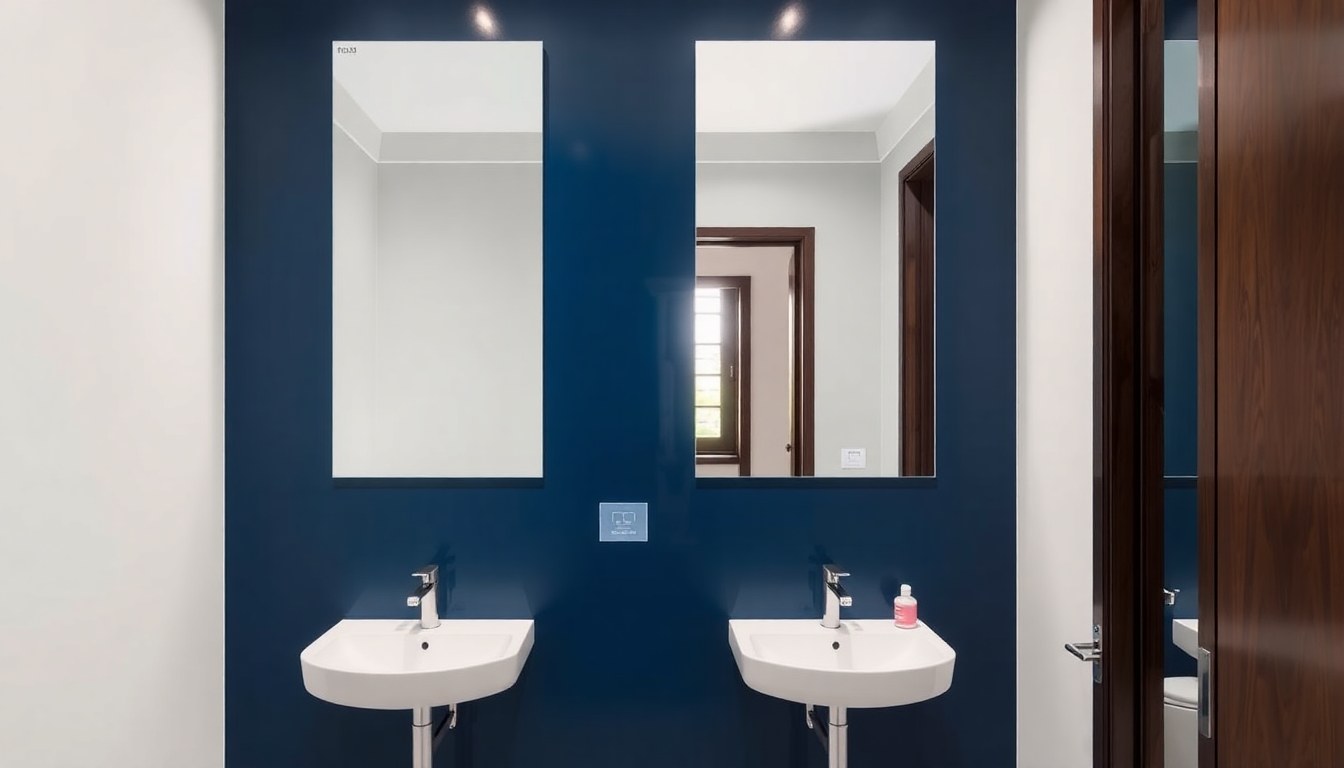
A powder room at 6×4 ft—roughly 24 square feet—leaves zero margin for improvisation. When the vanity depth eats 18 inches and the door swing claims another 22, you're left with 30 inches of usable circulation. The HSR Layout apartment we're walking through today sits in a 2019 mid-rise where the powder room backs onto the kitchen duct, giving us one wet wall and three dry surfaces. The architect specified a wall-hung vanity, a single-lever deck-mount faucet, and a backlit mirror that doubles as the primary light source. What follows is the full spec chain—from RCP to as-built—and the three handover checks that keep the punch list clean.
The RCP and the single-circuit strategy
In a 6×4 powder room, the reflected ceiling plan carries exactly two loads: the mirror circuit and the exhaust fan. We ran a single 6-amp lighting circuit to a junction box 200 mm left of mirror centreline, then a flex drop to the mirror's integral driver. The rectangle LED mirror we specified measures 30×24 inches, draws 18 watts, and ships with a 12V constant-current driver rated IP44. The driver sits in the false ceiling void; the mirror itself mounts flush to the tile face with four brass mirror-screws torqued to 3 Nm.
The exhaust fan—a 150 mm axial unit—runs off the same circuit but on a separate switch near the door. Total circuit load: 36 watts. We avoided a second circuit for downlights because the mirror's edge-lit panel throws 400 lumens across the vanity plane, enough for grooming and adequate for the 2×2 metre floor area. In Bangalore's monsoon months—June through September—that exhaust fan cycles every 20 minutes during occupancy to manage humidity and prevent mirror fogging.
Vanity and faucet: the deck-mount detail
The vanity is a 750 mm wall-hung unit in moisture-resistant MDF with a 12 mm engineered-stone top. Mounting height to underside of counter: 800 mm above finished floor level. The stone top overhangs the cabinet by 25 mm on three sides, giving a total footprint of 800×450 mm. We specified a single pre-drilled faucet hole at 35 mm diameter, positioned 100 mm from the back edge and centred left-to-right.
The faucet is a single-lever deck-mount model with a 150 mm spout reach and a flow rate of 6 litres per minute at 3 bar. Cauvery water in HSR averages 250 ppm TDS with moderate hardness; we fitted an inline cartridge filter under the vanity to protect the ceramic disc cartridge. The faucet's supply lines—braided stainless flex hoses, 300 mm long—connect to angle stops mounted 600 mm above FFL on the wet wall. Drain is a 32 mm brass pop-up waste with an overflow channel, connecting to a P-trap and a 40 mm PVC stub-out that ties into the main soil stack 1.2 metres downstream.
Deck-mount vs. wall-mount in tight powder rooms
Deck-mount faucets simplify the roughing because the supply lines and drain all terminate below the counter, inside the vanity cabinet. Wall-mount faucets look cleaner but demand concealed valve bodies and a tile joint line that lands within ±3 mm of the faucet escutcheon—difficult when the tiler works to ±5 mm tolerance and the plumber installs the valve body before tiling. In a 6×4 powder room where every site visit costs time, deck-mount is the lower-risk spec.
Mirror placement and the sightline check
The mirror's bottom edge sits 150 mm above the counter surface, giving a clear sightline for a user standing 600 mm from the vanity face. Top edge lands at 1,950 mm above FFL—high enough that a 6-foot user sees their full head and shoulders, low enough that the top rail doesn't crowd the ceiling. With a 2,700 mm slab height, that leaves 750 mm of tile above the mirror, enough to run a thin profile LED strip if the client later wants indirect uplighting.
We centred the mirror on the vanity centreline, not the room centreline. The vanity sits 100 mm off the left wall to clear the door swing, so the mirror follows that offset. This asymmetry reads correctly when you enter the room because your eye tracks the vanity plane, not the wall-to-wall dimension. The mirror's edge-lit panel has a colour temperature of 4,000 K—neutral white—and a CRI of 90, adequate for makeup and shaving without the yellow cast of 3,000 K warm white.
Tile layout and the wet wall strategy
Floor tile is a 600×600 mm porcelain in a matte finish, laid in a straight grid with 2 mm joints. At 6×4 ft, the floor takes exactly four tiles lengthwise and two-and-a-third widthwise, leaving a 200 mm cut along the right wall. We started the layout from the door threshold and worked back, so the cut tile lands behind the vanity where it's least visible. Wall tile is a 300×600 mm rectified porcelain, laid in a running bond with 1.5 mm joints.
The wet wall—the one behind the vanity—received a waterproof membrane up to 1,200 mm above FFL, even though there's no shower or tub. Bangalore's monsoon humidity can drive condensation behind wall-hung vanities, especially when the exhaust fan cycles off. The membrane is a two-part cementitious coat applied in 1 mm layers, tested to IS 2553 for water-tightness. We extended it 300 mm past each edge of the vanity to cover the full splash zone.
The three handover checks that prevent callbacks
First check: mirror-to-faucet alignment. With the mirror mounted and the faucet installed, stand at the vanity and confirm that the faucet spout, the drain, and the mirror centreline all fall on the same vertical plane. A 10 mm offset is invisible; a 30 mm offset reads as sloppy. This check happens after tile but before grouting, when you can still shim the mirror mounts if needed.
Second check: door swing clearance. Open the door fully and measure the gap between the door edge and the vanity face. Minimum clearance: 50 mm. If the gap is tighter, the door handle can nick the stone counter during a fast swing. We've seen this on three HSR projects where the door was hung after the vanity was mounted, and the hinge side shifted 15 mm during installation.
Third check: exhaust fan flow direction. Turn on the fan and hold a tissue near the grille. The tissue should pull toward the grille, confirming negative pressure. If it flutters or hangs limp, the duct run has a kink or the fan is wired in reverse. This check takes 15 seconds and catches 80 percent of ventilation issues before handover.
Material schedule and lead times
The mirror ships in seven business days from order confirmation. The vanity—if it's a standard 750 mm model—ships in ten days; custom widths add another week. The faucet and waste assembly are off-the-shelf items available in Bangalore within 48 hours. Tile is the long pole: 600×600 porcelain in matte finishes often requires a mill order, which runs three to four weeks from indent to delivery. We specify tile first, then back-schedule the mirror and vanity to arrive two weeks before the tiler finishes, giving the site supervisor time to stage materials without blocking the work zone.
For a 6×4 powder room, total material cost—mirror, vanity, faucet, tile, membrane, and hardware—runs between ₹65,000 and ₹90,000 depending on tile selection and vanity finish. Installation labour adds another ₹18,000 to ₹25,000, assuming a five-day schedule with a tiler, plumber, electrician, and carpenter working in sequence. The mirror mounts last, after final paint touch-up, to avoid overspray on the glass.
Questions architects ask
Can I spec a larger mirror in a 6×4 powder room, or does it overwhelm the space?
A 36×24 inch mirror works if the ceiling height is 2,850 mm or more and the vanity counter is narrow—400 mm deep instead of 450 mm. The risk is that a tall mirror in a low-ceiling room creates a visual imbalance, making the powder room feel like a vertical slot. If you want more reflective area, consider a capsule LED mirror at 36×24 inches with rounded top and bottom edges; the curved profile softens the height and reduces the slot effect.
What's the minimum distance between the mirror's bottom edge and the counter surface?
We hold 150 mm as standard. Less than 100 mm and the mirror edge sits inside the splash zone, collecting toothpaste and soap residue. More than 200 mm and the sightline drops too low for shorter users. The 150 mm dimension also gives you room to run a small toiletry shelf or a linear drain tray along the backsplash without interfering with the mirror mounting screws.
Should the powder room exhaust fan run on the same switch as the light, or separately?
Separate switches. Powder rooms see short, frequent use—two to three minutes per visit. If the fan runs only when the light is on, it shuts off before it clears the humidity. We wire the fan to a timer switch set for a ten-minute run after the user leaves. In Bangalore's June-to-September monsoon, that timed run prevents mildew on grout lines and keeps the mirror surface dry.
Does a wall-hung vanity need blocking in the wall, or can it mount directly to tile?
It needs blocking. A 750 mm vanity with a stone top and a full under-counter drawer weighs 40 kg empty; add 10 kg when the drawer is loaded. Mounting screws driven into tile and 12 mm cement board will pull out within six months. We install a 100×50 mm treated-wood ledger at 780 mm above FFL, anchored to the brick with four 10 mm expansion bolts spaced 200 mm on centre. The vanity's rear mounting rail bolts to that ledger through pre-drilled holes in the cabinet back.
Can I use a vessel-mount basin instead of an under-counter basin in a 6×4 powder room?
You can, but it raises the faucet height and the overall vanity profile. A vessel basin sits 120 to 150 mm above the counter, so the faucet spout needs to clear 200 mm to avoid splashing. That puts the faucet lever at roughly 1,050 mm above FFL—awkward for children and shorter users. In tight powder rooms, an under-counter or semi-recessed basin keeps the faucet at a comfortable 900 mm height and preserves the slim profile that makes a small room feel open.
Spec a powder room mirror
If you're detailing a compact powder room in HSR, Koramangala, Indiranagar, or anywhere else in Bangalore, the mirror is the one element that sets the tone—functionally and visually. Bathqube mirrors ship BIS-certified, carry a ten-year warranty on the LED driver and the silvering, and arrive with mounting hardware and a wiring diagram that your electrician can follow without a callback. Spec a Bathqube mirror for your next project, or request a configurator quote with your site dimensions and we'll send a shop drawing within 48 hours.


