Glass-to-wall tolerance for a hinged shower door: why we spec ±2mm, not ±5mm
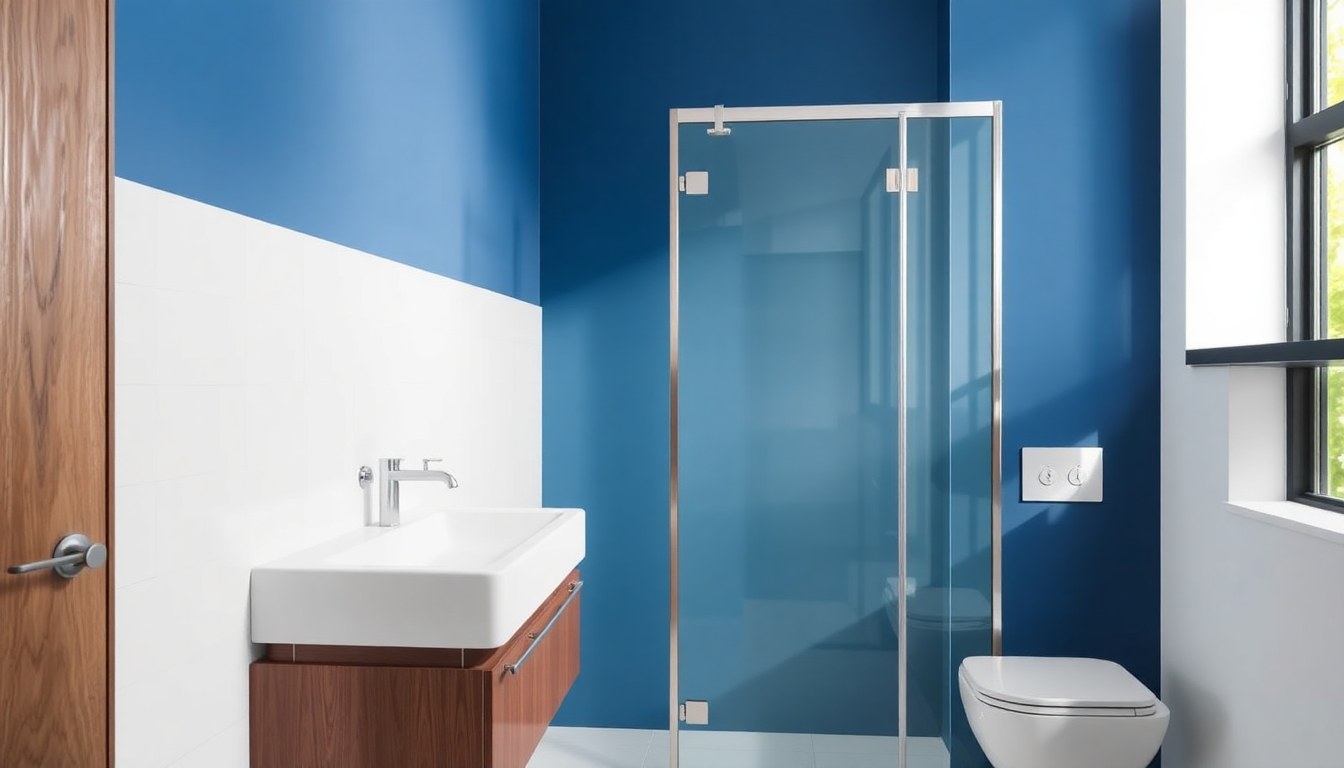
A hinged shower door mounts directly to the wet-area wall, and the hinge plate—typically 60×40mm stainless—has about 2mm of adjustment travel before you're shimming or scribing. That's the hard limit. Most Bangalore site walls, even recent RCC construction in Whitefield or Sarjapur Road, deliver ±3–5mm out-of-plumb over a 2100mm height, and that variance shows up as a visible gap at the top hinge or a forced fit that pre-loads the glass. We spec ±2mm glass-to-wall tolerance because it's the widest window a standard European hinge can absorb without visible correction, and it keeps the punch list clean at handover.
Why ±2mm, not the ±5mm you see in aluminium-frame schedules
Aluminium shower-door frames use perimeter channels that can absorb 4–5mm of wall irregularity through internal shimming and silicone packing. The frame hides the correction. A frameless hinged door has no such buffer: the hinge plate sits flush to the wall, the glass edge is exposed, and any out-of-plumb condition translates directly into a wedge-shaped gap between glass and tile. At the top hinge, a 3mm gap is visible from the bedroom door. At the bottom, it telegraphs water onto the threshold.
The ±2mm figure comes from the adjustment range of a typical pivot hinge—brands like Dorma, Häfele, or the Italian mechanisms we mount on Bathqube enclosures. The hinge plate has slotted screw holes that allow ±1mm lateral shift and ±1mm rotation correction. Add the compression tolerance of the gasket (where fitted) and you have roughly 2mm total play before you're into shim territory or asking the contractor to re-plumb the wall.
Architects who've worked on older Jayanagar or Basavanagudi renovations know that brick-and-plaster walls routinely deliver ±8–10mm variance. In those cases, we recommend a niche-mount or return-panel configuration that shifts the hinge load to a factory-squared glass edge, not the site wall. If the design requires wall-mount, the RCP needs to call out a plumb check and a skim-coat correction before tile goes up.
The three-point site measurement protocol we send Bangalore installers
Bathqube sends a measurement checklist to every installer before the first site visit. It's a single-page PDF with three checkpoints, and it catches 80% of the tolerance issues that would otherwise surface at installation. The checklist assumes the wet-area wall is tiled and grouted; if you're measuring before tile, add the tile thickness plus adhesive bed (typically 12–15mm) to the rough opening.
Checkpoint one: plumb over height
Measure the wall plumb at three heights—300mm, 1050mm, and 1950mm from the finished floor—using a digital level or a 1800mm spirit level. Record the deviation in millimetres. If the wall leans more than 2mm over the full height, flag it in the site report. Most Bangalore RCC structures post-2015 will hold ±1–2mm; older construction or fast-track interiors can drift to ±4mm, especially on partition walls that aren't load-bearing.
Checkpoint two: wall-to-threshold square
Check that the hinge wall meets the shower threshold at 90°±1°. Use a builder's square or measure diagonals if the enclosure is recessed. A skewed corner forces the door to swing out of plane, and the latch edge won't seal against the fixed panel or return wall. This is the error that shows up as a 5mm gap at the top corner after installation, and it's nearly impossible to correct without re-cutting the glass or shimming the threshold, neither of which we recommend.
Checkpoint three: substrate and anchor load
Confirm the wall substrate—is it 150mm RCC, 100mm AAC block, or 75mm cement board on steel stud? A hinged door loads the top hinge at roughly 25kg (for an 800×2000mm, 10mm-thick panel), and the anchor needs 40mm embedment into solid masonry or a toggle bolt rated to 50kg if it's board-on-frame. We've seen Koramangala and Indiranagar apartments where the wet-area wall is 12mm Hardie board over 50mm stud, and the architect didn't call out blocking behind the hinge zone. That's a re-survey and a change order.
When to call for a re-survey instead of forcing the fit
If the site measurement shows wall plumb beyond ±2mm, the standard response is not to install anyway and pack the gap with silicone. Silicone is not a structural shim, and a bead thicker than 3mm will sag or discolour within six months under Bangalore's monsoon humidity. The correct response is to issue a site non-conformance report and request one of three corrections before the glass is templated.
Correction one: skim-coat the wall. If the wall leans outward (away from the enclosure), the tiler can apply a feather-edge skim coat of tile adhesive or micro-concrete to bring the surface back to plumb. This adds 2–3 days to the schedule but costs less than ₹3,000 for a typical 1.2×2.1m wall. It's the cleanest fix and the one we recommend for new construction in Whitefield or Sarjapur Road, where the builder is still on site.
Correction two: switch to a niche-mount hinge. If the wall can't be corrected and the design allows it, we can spec a niche-mount hinge that anchors to the side walls of the shower recess instead of the back wall. This shifts the tolerance requirement from plumb to parallel—the two side walls need to be parallel within ±2mm, which is easier to achieve in a three-sided enclosure. The door swings inward, so the design changes slightly, but the glass-to-wall joint is now factory-squared.
Correction three: add a U-channel at the hinge edge. If the design brief won't allow a niche mount and the wall can't be skimmed, the fallback is a slim aluminium U-channel (typically 12×20mm) along the hinge edge of the glass. The channel has an internal shim slot that can absorb up to 5mm of wall variance. It's no longer a true frameless door, but it's better than a visible gap or a silicone bead that will fail. We use this detail on heritage renovations in Malleshwaram or Basavanagudi, where the walls are 1940s brick and re-plastering isn't an option.
How Cauvery hard water affects the tolerance conversation
Bangalore's municipal supply averages 200–300 ppm TDS, and the calcium carbonate precipitates as a white film on any surface where water evaporates slowly. A 3mm gap between glass and tile is a capillary trap: water wicks into the gap, evaporates, and leaves a calcium deposit that's nearly impossible to clean without a razor blade. Within three months, the gap line is visible as a white stripe from across the bathroom.
This is why we don't accept "the silicone will seal it" as an installation solution. Silicone stops water from leaking through the wall, but it doesn't stop water from sitting in the gap and evaporating. The only durable solution is to hold the glass-to-wall gap to under 1.5mm—tight enough that surface tension pulls the water down to the threshold instead of letting it pool. That's achievable only if the wall is plumb within our ±2mm spec.
What the BIS standard says—and what it doesn't
IS 2553 (the Bureau of Indian Standards specification for glass in building) addresses glass thickness, edge finishing, and load rating, but it doesn't specify installation tolerances for frameless enclosures. The tolerance figures we use—±2mm for hinge-to-wall, ±1mm for glass-to-glass at a seam—come from European hardware manufacturers (DIN 18540 in Germany, which governs joint sealant application) and from two decades of field data in Bangalore residential projects.
The absence of a BIS installation standard means the tolerance conversation happens project by project, usually between the glass fabricator and the site contractor. Architects who want to avoid that negotiation at the punch-list stage should call out the ±2mm figure in the RCP and the wet-area detail sheet, and make plumb verification a hold point before the tiler starts. It's a one-hour check that prevents a two-week correction cycle later.
Questions architects ask
Can I specify ±3mm tolerance and still get a clean install?
Not with a standard pivot hinge. The hinge plate will absorb 2mm, and the remaining 1mm will show as a gap or require a thicker silicone bead. If the design can't meet ±2mm, switch to a U-channel hinge edge or a niche-mount configuration. Don't ask the installer to "make it work"—that's how you end up with shim plates visible behind the glass.
What if the wall is plumb but the floor isn't level?
A sloped floor (common in wet areas, where the screed pitches 1:100 toward the drain) doesn't affect the hinge-to-wall tolerance, but it does affect door operation. If the floor slopes more than 3mm over the width of the door, the door will swing open or closed on its own. The fix is to shim the bottom pivot or adjust the closer tension, but that's a separate conversation from wall plumb. Call out both in the site survey.
How do I verify the wall is within tolerance before I approve the glass order?
Request a pre-template site visit from the fabricator. They'll bring a digital level and a laser measure, check the three points in our protocol, and send you a one-page report with photos. If the wall is out of spec, you have time to correct it before the glass is cut. Bathqube includes this visit at no charge for projects in Bangalore; it's faster to catch the issue early than to re-template after the first install fails.
What's the lead time if we need to re-survey and correct the wall?
A skim-coat correction adds 3–5 days (2 days for the skim to cure, 1 day for the re-survey, 2 days to update the shop drawing). Switching to a niche-mount or U-channel hinge adds 1 week if the glass hasn't been cut yet, or 3 weeks if we're re-fabricating. The earlier you flag the issue, the shorter the delay. Most architects build a 10-day tolerance buffer into the wet-area schedule for exactly this reason.
Does the ±2mm spec apply to sliding doors, or just hinged doors?
Sliding doors are more forgiving—the track system can absorb ±3–4mm of wall variance through shim plates under the rail, and the roller carriages have lateral adjustment. The ±2mm figure is specific to hinged and pivot doors, where the hinge is a rigid two-point mount and there's no track to distribute the load. If you're specifying a sliding enclosure, you can relax the wall tolerance to ±3mm and still get a clean result.
Spec a Bathqube enclosure for your next Bangalore residential project, or request a configurator quote with site-verified dimensions. We'll send the measurement protocol and schedule the pre-template survey.


