Mirror edge polishing: C-edge vs pencil-edge for a 5×3 ft Indiranagar vanity mirror
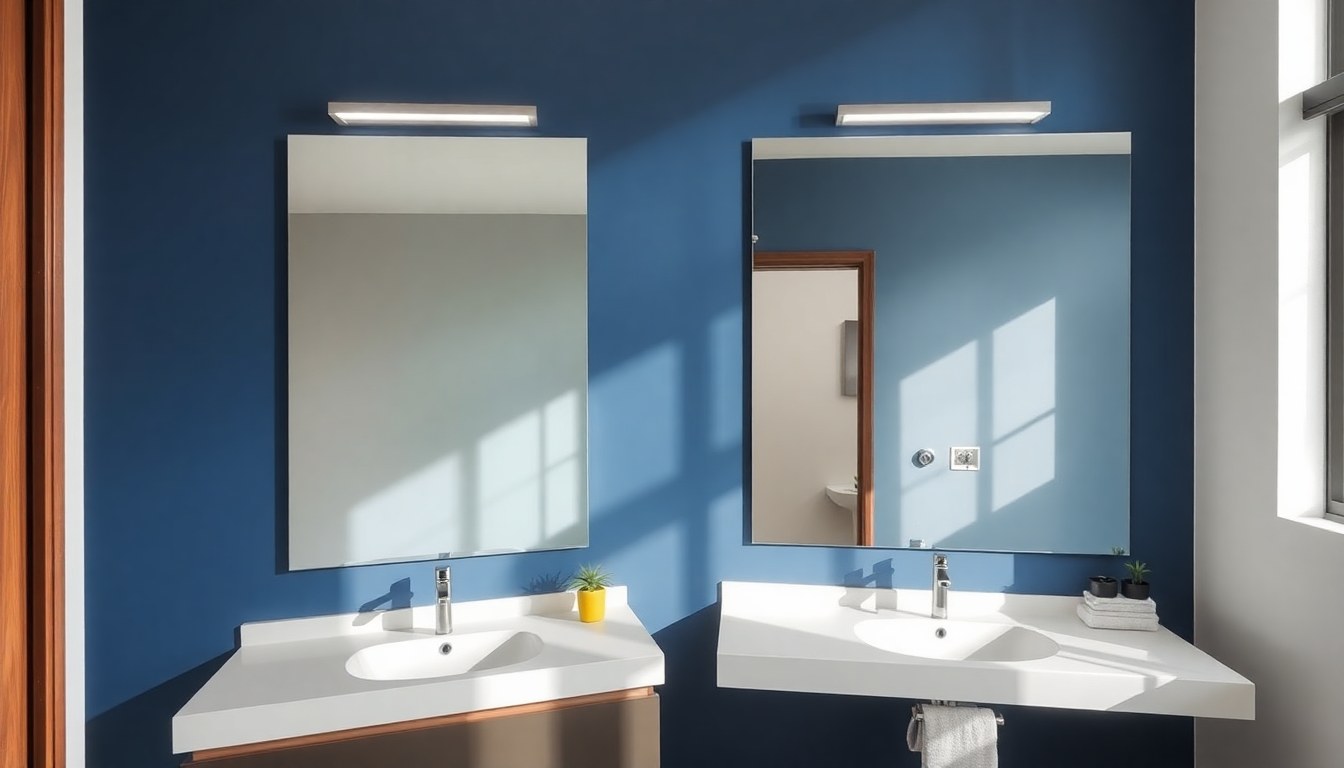
A 5×3 ft vanity mirror in an Indiranagar master bath weighs approximately 22 kg when fabricated from 5 mm float glass. That mass, combined with a 1,524 mm span, makes the edge profile a structural and aesthetic question, not a cosmetic afterthought. The polished edge you specify determines the reflected light line at the perimeter, the probability of micro-chipping during site handling, and the installer's margin for error when the wall is 2 mm out of plumb. C-edge and pencil-edge are the two profiles most commonly specified for large residential vanity mirrors in Bangalore; they differ in radius, labor intensity, and the way each catches light when the sun moves across a west-facing bathroom between 4 and 6 PM.
What the edge profile controls
The polished edge of a mirror serves three functions. First, it eliminates the sharp 90-degree arris left by the cutting wheel, reducing the risk of cut injury during installation and the likelihood of micro-fracture propagation from the edge into the body of the glass. Second, it defines the visual terminus of the reflective surface: a crisp geometry or a soft fade, depending on the radius and bevel angle. Third, it changes how the mirror sits against the wall or within a frame rebate, because the edge thickness and profile affect the required clearance and the load distribution across the mounting points.
For a 5×3 ft mirror—common in Koramangala and Sadashivanagar master baths where the vanity counter runs 1,800 mm or longer—the edge is always visible. Even when the mirror is mounted 50 mm above a stone counter, the side edges and top edge remain exposed, and any irregularity in the polish or geometry becomes conspicuous under task lighting. The two most frequently specified profiles, C-edge and pencil-edge, represent a trade-off between manufacturing simplicity and visual softness.
C-edge: geometry and reflected light
C-edge polishing removes the sharp corner and replaces it with a small chamfer, typically 1–2 mm at 45 degrees, followed by a convex radius that blends the chamfer into the face of the glass. The result is a narrow, bright highlight along the perimeter when light strikes the edge at an oblique angle. In a bathroom with a single ceiling-mounted downlight or a linear LED strip above the mirror, the C-edge produces a clean, geometric light line that emphasizes the rectangular form.
The fabrication process is faster than pencil-edge because the grinding wheel makes fewer passes and the radius is smaller, reducing both cycle time and the risk of over-polishing. For a 5 mm mirror, the C-edge typically adds 8–12 minutes of machine time per linear meter, compared to 15–20 minutes for a pencil-edge. That efficiency translates to a lower per-piece cost and a shorter lead time, which matters when you're coordinating handover with a Whitefield builder who has a fixed possession date.
Site handling and chipping risk
The smaller radius of a C-edge leaves a slightly more acute transition between the chamfer and the face, which makes the edge moderately more vulnerable to micro-chipping if the mirror is set down on a gritty surface or if the installer's gloved hand slips during positioning. In practice, this is rarely a problem when the site is clean and the mirror is handled by two people, but it becomes a concern on punch-list visits when the mirror has been leaned against a plastered wall that hasn't been painted yet. The C-edge is engineered for clean sites; if the site conditions are rough, the pencil-edge offers a more forgiving profile.
Pencil-edge: radius and visual softness
Pencil-edge polishing rounds the entire thickness of the glass into a continuous convex curve, typically with a radius equal to half the glass thickness. For a 5 mm mirror, that means a 2.5 mm radius; for a 6 mm mirror, 3 mm. The result is a soft, pill-shaped edge that diffuses reflected light rather than concentrating it into a single highlight. Under the same downlight that produces a sharp line on a C-edge mirror, the pencil-edge will show a graduated fade from bright to shadow, which reads as more organic and less technical.
The fabrication process requires more grinding wheel contact time and a finer sequence of grits to achieve a consistent radius without flat spots or waviness. The polishing head must maintain even pressure across the full thickness of the glass, which is more difficult on a 1,524 mm edge than on a 600 mm edge. Any variation in feed rate or wheel wear will show up as a subtle ridge or dip that becomes visible when you sight along the edge at a low angle. For this reason, pencil-edge mirrors are typically specified when the architect wants a refined, hand-finished appearance—closer to the visual language of our designer mirror series, which uses the same polishing protocol.
Tolerance and mounting clearance
The larger radius of a pencil-edge changes the effective thickness of the mirror at the perimeter. A 5 mm mirror with a 2.5 mm radius will measure approximately 4.7 mm at the edge when you set a caliper across the curve, because the radius reduces the parallel land. This matters when the mirror is mounted in a channel or rebate: if the shop drawing specifies a 6 mm channel width for a 5 mm mirror, the pencil-edge will have 1.3 mm of clearance on each side, compared to 0.5 mm for a flat-polished or C-edge mirror. That extra clearance makes installation easier but increases the risk of rattle if the mirror isn't shimmed or bedded in silicone.
For wall-mounted mirrors installed with adhesive pads or French cleats—common in HSR Layout and Jayanagar apartments where the walls are 150 mm AAC block—the pencil-edge has no effect on the mounting method, but it does change the visual gap between the mirror and the wall. The rounded edge creates a small shadow line that can make the mirror appear to float 1–2 mm off the wall, even when it's flush-mounted. If that shadow is undesirable, specify a C-edge or a flat-polished edge with a small chamfer.
Comparative cost and lead time
In Bangalore, the surcharge for pencil-edge polishing on a 5×3 ft mirror is typically 15–25 percent over C-edge, depending on the fabricator's equipment and the order volume. For a single custom mirror, expect an additional ₹800–₹1,200; for a project with six identical mirrors across three bathrooms, the per-piece delta drops to ₹500–₹800 because the machine setup is amortized. Lead time increases by 2–3 working days for pencil-edge, primarily due to the longer polishing cycle and the quality-control step required to verify radius consistency.
C-edge polishing is the default for most rectangle LED mirrors and square mirrors in our catalogue because it balances cost, durability, and visual clarity. Pencil-edge is available on request for projects where the architect wants a softer, less industrial edge—common in Sadashivanagar and Indiranagar homes where the bathroom finishes lean toward natural stone and matte fixtures rather than chrome and porcelain.
Installation notes for Bangalore sites
Regardless of the edge profile, a 5×3 ft mirror requires two installers and a clean, dry wall surface. The most common mounting method in Bangalore residential projects is adhesive mirror tape or silicone beads applied in a grid pattern, with supplementary mechanical clips at the top edge if the mirror weighs more than 20 kg. The wall must be primed and cured; fresh plaster or paint applied within the previous 72 hours will not provide adequate bond strength, and the mirror may sag or detach during the monsoon months when humidity exceeds 80 percent.
When the wall is out of plumb by more than 3 mm over the 1,524 mm width, the installer will need to shim the low side to prevent the mirror from rocking. A C-edge mirror will show any gap between the glass and the wall as a visible light leak; a pencil-edge mirror will mask the gap slightly because the rounded edge creates a graduated shadow. If the as-built wall condition is poor, the pencil-edge is the more forgiving choice.
Cleaning and maintenance
Both C-edge and pencil-edge mirrors are cleaned the same way: a damp microfiber cloth with a pH-neutral glass cleaner, wiped from top to bottom to avoid streaks. The edge itself requires no special treatment, but installers should avoid using abrasive pads or scouring powder near the polished perimeter, because any scratch on the edge will catch light and become a permanent visual flaw. In areas with Cauvery hard water—TDS 200–300 ppm—wipe the edge dry after each shower to prevent mineral deposits from dulling the polish.
Which profile to specify
Specify a C-edge when the project prioritizes cost control, fast turnaround, and a clean geometric appearance. The C-edge is the correct choice for most Whitefield and Electronic City apartments where the bathroom design is contemporary, the fixtures are chrome or brushed nickel, and the builder's handover schedule is tight. The sharp light line reinforces the rectangular form and pairs well with linear LED lighting and wall-mounted faucets.
Specify a pencil-edge when the project allows a slightly higher budget and the design language is softer or more refined. The pencil-edge works well in Koramangala and Indiranagar homes where the bathroom finishes include honed marble, matte black fixtures, or terrazzo tiles—contexts where a hard geometric edge would feel out of place. The rounded profile also reduces chipping risk on sites where the construction discipline is inconsistent or the installer is working around active trades.
For projects that include capsule LED mirrors or other non-rectangular forms, the pencil-edge is often the better choice because it complements the curved perimeter and avoids the visual conflict of a sharp chamfer meeting a radiused corner. The additional cost is justified by the coherence of the finished assembly.
Questions architects ask
Can I specify a pencil-edge on a 6 mm mirror without increasing the mounting clearance?
Yes, but the radius will be 3 mm instead of 2.5 mm, which means the effective edge thickness drops to approximately 5.6 mm. If the mirror is mounted in a channel, verify that the channel width accommodates the reduced thickness plus the required clearance for thermal expansion—typically 1 mm per side. For adhesive-mounted mirrors, the thicker glass provides better rigidity and the pencil-edge has no effect on the mounting method.
Does the edge profile affect the reflective coating at the perimeter?
No. The reflective silver or aluminum coating is applied to the back surface of the glass before edge polishing, and the coating is sealed with a protective paint layer that extends to within 3–5 mm of the edge. The edge polishing process does not touch the coated surface. However, if the edge is chipped during handling, the chip may propagate into the coated area and cause localized delamination, which is why the pencil-edge's greater durability can be an advantage on rough sites.
How do I specify edge polishing on a shop drawing?
Include a detail callout with the profile type (C-edge or pencil-edge), the glass thickness, and any dimensional tolerances for the finished edge. For example: "5 mm mirror, pencil-edge polish, radius 2.5 mm ±0.2 mm, all four edges." If the mirror has cutouts for electrical boxes or plumbing penetrations, specify whether those internal edges should also be polished or left seamed. Most fabricators will seam internal edges unless you explicitly call for polishing, because polishing a curved internal cutout requires a smaller wheel and adds significant labor time.
What is the minimum edge length that can be pencil-polished without flat spots?
Most CNC edge polishers in Bangalore can maintain a consistent radius on straight edges as short as 200 mm, but on edges shorter than 150 mm the wheel may not complete a full contact cycle, leaving a slight flat at the midpoint. For small mirrors or mirrors with complex geometry, confirm the fabricator's minimum edge length before specifying pencil-edge. If the edge is too short, C-edge or flat polish with a small chamfer is the safer choice.
Can I mix edge profiles on the same mirror—pencil on the top and sides, flat on the bottom?
Yes, and this is sometimes specified when the bottom edge of the mirror sits on a counter or shelf and will not be visible. Mixing profiles reduces cost without compromising the visible finish. On the shop drawing, call out each edge individually: "Top and side edges: pencil-edge, radius 2.5 mm. Bottom edge: flat polish, 1 mm chamfer." The fabricator will program the CNC polisher accordingly. This approach is common on large vanity mirrors in JP Nagar and Banashankari projects where the counter runs the full width of the vanity and the bottom edge is always concealed.
Bathqube mirrors are BIS-certified, edge-polished to spec, and available with C-edge or pencil-edge finishes for Bangalore residential projects. Spec a vanity mirror for your next handover or request a configurator quote with site dimensions and edge profile notes—we'll send a shop drawing within 48 hours.


