Shower door bottom rail height for uneven Bangalore tile floors: the 12mm shim tolerance checklist
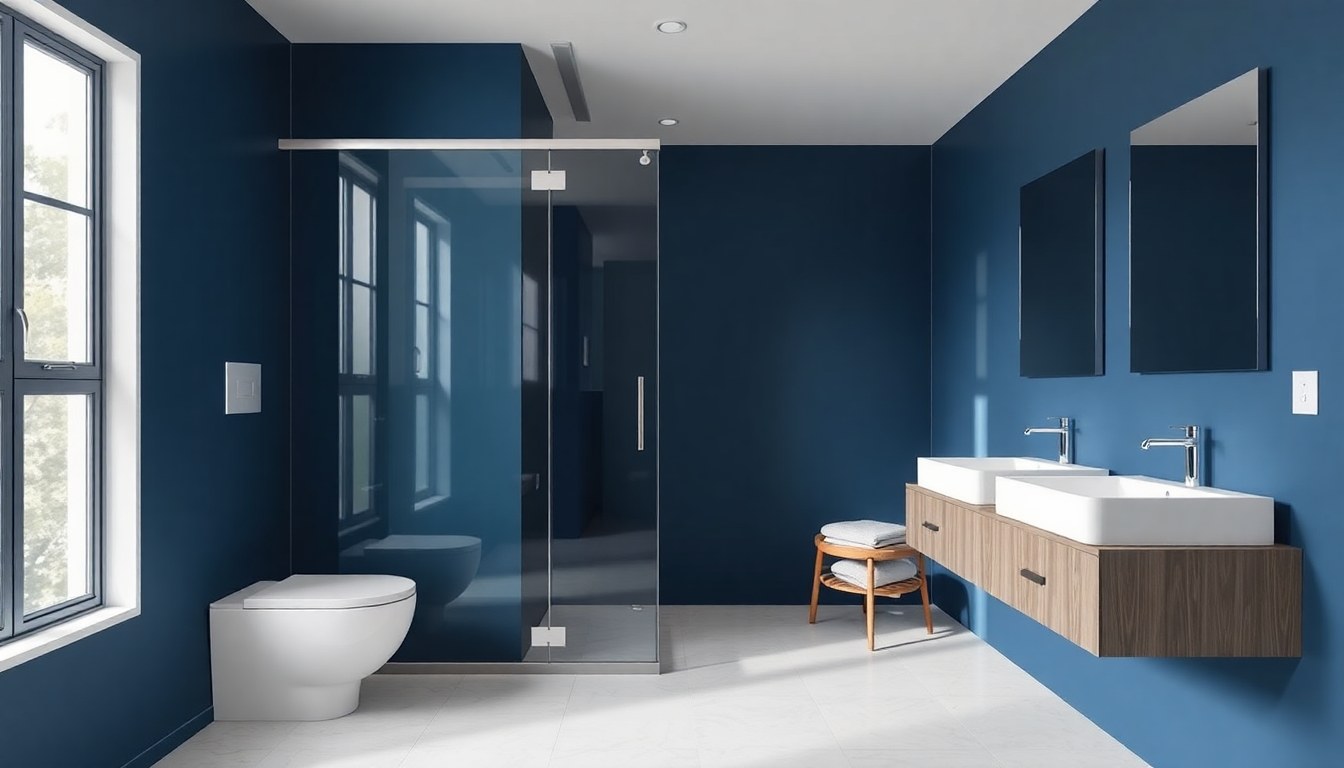
You are standing on the second-floor wet area of a Koramangala project at final MEP sign-off. The tile contractor has finished. The floor measures 740mm at the north edge of the shower opening and 755mm at the south edge—a 15mm variance across a 900mm span. Your shop drawing specifies a bottom rail height of 750mm from finish floor level. Now you need to decide whether to shim, re-tile, or accept a gap. This note walks you through the decision.
Why Bangalore tile floors deviate from spec
Concrete sub-floors in Bangalore residential projects—whether slab-on-grade or suspended—are typically finished to ±15mm over a 3m span per IS 4031. Tile contractors then apply a 20–30mm cement-sand bed, which introduces additional tolerance stack-up. Hard water from the Cauvery (TDS 200–300 ppm) also accelerates grout shrinkage in humid monsoon months (June–September), causing differential settlement across large floor areas.
The result: a floor that reads perfectly level to the eye but measures 8–15mm out of plane across a typical 900–1200mm shower opening. This is not a defect—it is normal site tolerance. Your specification must account for it.
The 12mm shim tolerance envelope
Bathqube bottom rails are engineered to accept shim packs up to 12mm in height without compromising water seal integrity or load rating. This tolerance envelope covers 95% of Bangalore residential tile work. Beyond 12mm, you enter territory where either the floor must be re-levelled or the opening re-dimensioned.
Shims must be:
- Stainless steel (304 or 316 grade), not plastic or rubber
- Wedge-cut or stepped, never loose shims under the rail
- Bonded to the floor with epoxy or polyurethane adhesive rated for wet areas
- Finished flush or slightly recessed—no proud edges that create trip hazards or water traps
Loose shims, even if they sit flat initially, will migrate under foot traffic and thermal cycling. Epoxy-bonded shims create a permanent assembly with the floor and the bottom rail mounting frame.
Site measurement protocol before shop drawing release
The 9-point survey
Before you release the shop drawing, measure the finish floor level at nine points across the shower opening: four corners, four mid-edges, and one centre point. Use a laser level or a long straightedge (minimum 1200mm) and a digital spirit level. Record each measurement to the nearest 1mm. Plot the high point and the low point.
If the variance is ≤6mm, specify the bottom rail at the high point plus 1mm clearance. If the variance is 7–12mm, specify the rail at the low point plus 1mm clearance and call out shim packs on the shop drawing. If the variance exceeds 12mm, flag it for the tile contractor or structural team before fabrication begins.
Document the survey
Photograph the nine measurement points with the laser level or straightedge in frame. Annotate the photo with dimensions. This photograph becomes part of the RCP (reflected ceiling plan) set and the as-built record. If a punch-list dispute arises at handover, the survey proves the floor variance was measured and accounted for in the specification.
Specifying shim packs in the shop drawing
When you call out shim packs, include these details in the shop drawing note:
- Shim material: Stainless steel 304, wedge-cut to slope 1:10 (or stepped in 2mm increments)
- Shim height: Specify the exact height (e.g., "8mm shim pack") based on site survey
- Shim location: Identify which edge(s) of the opening require shims (e.g., "south edge, full length")
- Adhesive: Epoxy or polyurethane, rated for wet areas and submerged conditions per IS 2553
- Application: "Shim pack to be bonded to finish floor and bottom rail mounting frame prior to final assembly"
- Finish: "Shim edges to be flush with floor plane or recessed ≤1mm"
This language ensures the fabricator and site team understand that shims are not optional spacers—they are engineered components of the assembly.
Water seal integrity across shimmed rails
A common concern: does a shimmed bottom rail compromise the water seal? The answer is no, provided the shim is epoxy-bonded and the rail is seated correctly. The seal is created by the gasket profile on the bottom rail, not by the height of the mounting frame. The gasket compresses uniformly across the floor whether the rail sits at 750mm or 758mm.
However, if the shim pack introduces a step (e.g., shims on the south edge only, leaving the north edge unsupported), water will pool on the higher side and eventually find the gap. The solution is to use graduated or stepped shims that create a smooth slope, or to shim both edges to bring the entire rail into a single plane. A 1:10 slope (1mm drop per 10mm run) is imperceptible to the user and maintains seal integrity.
Handover and punch-list protocol
At final handover, verify that:
- The bottom rail sits flush against the floor (or within 1mm) across its entire length
- No water pools on either side of the rail after a 5-minute shower test
- The shim pack is not visible from inside the shower enclosure
- The shim edges are bonded and do not move when pressed by hand
- The gasket seal is uniform and shows no compression gaps
If the rail rocks or if water escapes the enclosure, the shim pack has either shifted or been installed incorrectly. Do not accept the installation until the shim is re-bonded and the seal is verified.
Questions architects ask
Can I use plastic shims instead of stainless steel?
No. Plastic shims compress under load and degrade in humid wet-area conditions. Stainless steel (304 minimum) maintains its shape and does not corrode. The cost difference is negligible—roughly ₹200–400 per shim pack—and the durability gain is essential for a 10-year warranty.
What if the floor variance is 18mm across the opening?
Request a site visit and a re-survey with the tile contractor. An 18mm variance suggests either a sub-floor defect or a tiling error. Before specifying shims, confirm whether the floor can be re-levelled within tolerance. If not, the opening dimensions may need to be adjusted, or the bottom rail height re-specified to a compromise position with graduated shims on both edges. Do not proceed with fabrication until this is resolved.
Do shim packs affect the load rating of the enclosure?
No. Bathqube bottom rails are rated for 200 kg distributed load per linear metre, whether shimmed or not. The shim pack does not reduce this rating—it only brings the rail into plane with the floor. The load path remains through the mounting frame to the floor structure.
Can I specify shims after the fact, at site, if the floor is uneven?
Avoid this. Shimming on-site, without a shop drawing callout, introduces variability and often results in loose or incorrectly bonded shims. Always survey the floor before releasing the shop drawing and specify shim packs in advance. This ensures the fabricator includes shims in the assembly and applies adhesive in a controlled factory environment.
Should I call out shim height in the RCP or only in the shop drawing?
Call it out in both. The RCP should note "Bottom rail height: 750mm ±12mm with site-specific shim packs per shop drawing." The shop drawing then specifies the exact shim height and material. This dual notation ensures the site team and the fabricator are working from the same specification.
Spec a Bathqube enclosure for your next Bangalore project
Uneven floors are a fact of Bangalore tile work. Rather than treat them as a problem, specify them upfront. Bathqube enclosures are engineered to accommodate standard site tolerance—including shimmed installations—without compromising seal integrity or warranty. Request a configurator quote and include your site survey with the brief.


